• Photo by Nicolas J Leclercq on Unsplash
  • Photo by Nicolas Tissot on Unsplash
  • Photo by NASA on Unsplash
  • Photo by USGS on Unsplash

IUGG Assembly 2023

The 28th General Assembly of the International Union of Geodesy and Geophysics (IUGG) will take place from 11-20th July 2023 in Berlin, Germany. All the 8 associations under IUGG, including IAGA, will be a part of it and have separate and joint scientific as well as outreach sessions.


The scientific program for the conference can be found on the website. In particular, the IAGA sessions are listed here, which include the joint sessions with other associations.

The abstract submission and early bid registration have already started. The deadline for the two are 14th February and 28th April respectively.

There are also travel grants available and visa information for countries which require one. Please visit the assembly website or leave your questions below in the comments in case of any query. We'd be happy to answer them.

Space News

As you know, we have been following very closely the Artemis mission. In this blog, we bring the latest update. 

The Orion spacecraft had splashed down in the Pacific after which some tests were performed on it. Now, NASA has opened its hatch and is busy unpacking the spacecraft. The payloads will be checked and reused for future missions. 

Artemis was launched on November 16th, 2022 and returned to Earth after its 25 days mission. It was a reconnaissance mission before Artemis 2 flies with a crewed mission followed by a crewed landing by Artemis 3. 

Orion capsule of the Artemis 1 mission. Credit: NASA

Meet Our Researchers!

Firstly, wish you all a very Happy New Year 2023!

End of last year, we promised to bring new content for YouTube and we will deliver it soon!

IAGA YouTube channel is starting a 'Meet our researchers' series which will comprise of two videos about each researcher- one about their background and the other about the science that they work on. 

We will start with dedicating one month to one researcher and their science. Let us know in the comments if there is some particular scientist or topic you are interested in and we will get in touch with them.

Stay tuned to our YouTube Channel and our social media platforms for more info.


Thank you!

We at IAGA Social Media thank all of you for your support for the past year!

Our OG accounts - Facebook, Twitter and Instagram - have always had your encouragements!

We started our blog just two years ago and we have had immense support from all our readers. 

In addition, we started our LinkedIn and YouTube accounts this year. 

We thank you for following us and we promise to continue to bring lots of exciting content for the year 2023 on all our accounts. 


Lots of projects are lined up for 2023, especially for our YouTube, so stay tuned to our channels. 

(All our channels can be accessed from the top left of the blog page).


Image: Adobe stock

Space News

Our last space news blog was about the Artemis launch which is the first step to get humans back on the Moon. In this blog, we update you with the mission....

Orion spacecraft from the Artemis 1 mission has successfully come back to Earth! Artemis 1 launched from Earth on November 16th, 2022 for a 25 days mission with the aim of a test run before a crewed flyby mission to the Moon in Artemis 2 and a crewed landing in Artemis 3. 

Orion splashed down in the Pacific after which tests were performed on it. It has now been shifted to a ship which will deliver it back to the NASA centre for further tests to be carried out. Science standing on the moon again is not long now!

Orion after it splashed down in the Pacific Ocean. Credit: NASA


Ease the daunting task of writing

Here are very short and very obvious (but mostly overlooked) steps to write.

If you were looking for your motivation to write, read this blog. If you were unsure about your writing, read this blog. If you were looking for something else, read this blog and comment about it.

1. START

Even if it's one page or one paragraph or one sentence. Start the work. Just write the heading and your name. But start it. 

2. CREATE AN OUTLINE

The next step is to get ready with your idea. It doesn't have to be perfect and it doesn't need to be complete. All you need at this point is to know what you want to write. It could be as simple as "Introduction - Body - Conclusion" or as complex as your work demands. Getting a good outline helps to categorise the work.

3. SET GOALS

Create a deadline for yourself that's not tight. Give ample time to yourself to write. Include the time you'd spend to think of a new idea, procrastinate and revise. That way, if you finish before your set goal, you can either take a break or get a head start for your next goal. Even otherwise, you are still within your deadline.

4. TOOLS - HARDWARE

Use devices that make you want to write. It could be a tablet, an e-ink device, a particular keyboard, your laptop or a desktop. Get whatever eases your writing. You need to be comfortable to be able to write properly.

5. TOOLS - SOFTWARE

Many people prefer to write using LaTex because it is easier to format. Some people prefer Microsoft because their contributors use it. Try not to juggle between different softwares. Focus on one and define your format at the beginning. If its your first time using it, don't get intimidated and ask for help. Nowadays, there are answers to all questions on the internet. 

6. REST AND EAT

Rest whenever you want. Take a break whenever you feel like it. Don't stop your other activities for writing, especially something you like doing. Most of the times, good food makes you feel good about everything. So, eat rest and work. Eat rest and work. Eat rest and work. And repeat.


Image credits: The mighty Internet


Shivangi Sharan is a third year PhD student at the Laboratory of Planetology and Geosciences in France. Her research focusses on the study of the magnetic field of planets and to infer their internal structure from it. She is an active member of the IAGA Blog Team and can be contacted via e-mail here.


On This Day #3

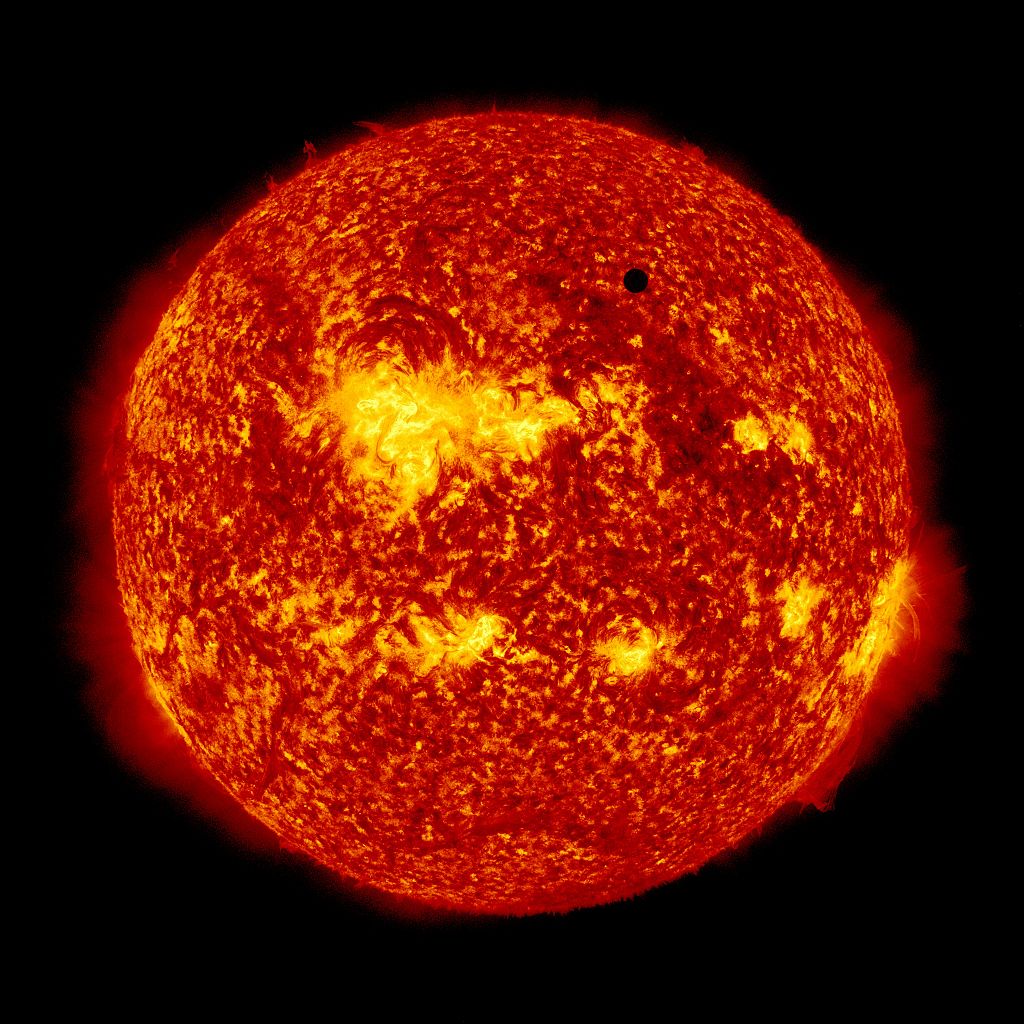
24th November is an important day for the science carried out for Venus. However, it is the Julian calendar date. The Gregorian calendar date is 4th December. In 1639, Jeremiah Horrocks observed the first ever transit of Venus from Earth. A transit is observed when a planetary body passes between the Sun and a planet.

The transit of Venus as observed in 2012 captured by NASA's Solar Dynamics Observatory Spacecraft.

From his calculations in 1631, he had predicted the next transit would take place 8 years later. He had a simple wooden telescope that he used to observe the transit.

He also calculated the solar parallax and concluded that the distance between the Earth and the Sun was more than what was assumed previously.

A painting of Jeremiah Horrocks observing the 1639 transit of Venus by Eyre Crowe in The Founder of English Astronomy, 1891