• Photo by Nicolas J Leclercq on Unsplash
  • Photo by Nicolas Tissot on Unsplash
  • Photo by NASA on Unsplash
  • Photo by USGS on Unsplash
Showing posts with label space. Show all posts

Exploration of the Jovian system #2

There are two icy moon missions of this decade that will reach their respective bodies of interest beginning of next decade- JUpiter ICy moons Explorer (JUICE) and Europa Clipper. The main focus of JUICE is Ganymede and for Clipper is Europa. Both these planetary bodies are moons of our Solar System's largest planet Jupiter. Scientists are particularly interested in the Jovian moons because these bodies contain large oceans under their surface making them a suitable place to study for potential habitability. They are called 'icy moons' because their surface is made up of ice! If you are interested to learn more about these moons, head to our previous blogs about them!

While JUICE launched on April 14th 2023, Clipper is all set to launch this month! If you are a space enthusiast and are interested in watching the launch: in person- head to Kennedy Space Center in Florida, USA, or online: head to NASA's website. The launch window starts within a week on October 10th and goes up till the end of the month. It will take Clipper five and a half years to reach Jupiter in 2030.

Image Credit: NASA

Space News

Let's have a glance at the upcoming Space missions' news!

In 2024, there are some milestones to be achieved for different Space missions. 

Find a sneak peak below.


1) Intuitive Machines 1 - NASA lunar lander launch in mid-February

2) Chang'e 6 - Chinese lunar sample return mission launch in May

3) Bepi Colombo - ESA mission fourth and fifth Mercury flyby on September 5 and December 2

4) Martian Moon eXploration - JAXA Phobos sample return launch in September

5) Europa Clipper - NASA Jupiter orbiter launch in October

6) Hera - ESA asteroids mission launch in October

7) VIPER - NASA lunar lander launch in November


Source: NASA

Image Credit: ESA- D. Ducros 

Space News

The Voyager 1 and 2 satellites were launched in 1977 to study and understand the giant planets of our
Solar System. It provided the first and only measurements yet around the two ice giants - Uranus and Neptune. However, the mission didn't end after that. The two satellites are still operating far beyond the giant planets in interstellar space.


The interstellar space starts where the Sun can no longer affect the surroundings. Voyager 1 entered this region in August 2012 while Voyager 2's entry was in November 2018. Their present distances from Earth are about 23 and 19 billion kms respectively. But a few days ago, NASA lost communication with Voyager 2 due to a shift in antenna. Hopefully, they can get it back by October when the satellite next resets itself for orientation. The mission also has a twitter account to keep us updated about news beyond the Solar System.


Lastly, we leave you with an interesting image from Voyager 1 taken at a distance of about 6 billion kms (from the Sun) called 'The Pale Blue Dot'. Try to find the Earth here. Hint: Look at the bright scattered light near the right of the image. It shows just how unimportant we are in the vast expanse of the universe. A reminder to not take ourselves and others too seriously! 


Images Credit: NASA

Exploration of the Jovian system

In a month's time, the European Space Agency's (ESA) JUICE mission would be launched. JUICE is the
Jupiter Icy Moons Explorer which aims to study 3 Galilean moons in an attempt to understand their internal structure.

The first measurements around Jupiter's moons were received from the Galileo mission. Galileo was launched by NASA in October 1989 and provided data from 1996 to 2003. Based on the data from the spacecraft, scientists believe that Europa, Callisto and Ganymede might have a subsurface ocean. Ganymede even has its own magnetic field while Io has active volcanoes. The data from the upcoming JUICE mission will provide further evidences to better constrain the interior of these natural satellites.

The JUICE mission is scheduled to launch on 13th April from French Guiana. It will carry 10 scientific instruments focused on understanding the Jovian magnetosphere and its interaction with the satellites. The spacecraft will revolve around Jupiter and is expected to make a total of 35 flybys providing data near the moons. During the final phase of the mission, JUICE will also orbit around Ganymede, which will give a clearer picture about its internal magnetic field.

Image Credit: ESA (Jupiter with its 4 Galilean moons- Io, Europa, Ganymede, Callisto).

If you are interested to know more, ask us in the comments or on our social media platforms (top left of page). You can also visit ESA's website about the JUICE mission here.


Space News

As you know, we have been following very closely the Artemis mission. In this blog, we bring the latest update. 

The Orion spacecraft had splashed down in the Pacific after which some tests were performed on it. Now, NASA has opened its hatch and is busy unpacking the spacecraft. The payloads will be checked and reused for future missions. 

Artemis was launched on November 16th, 2022 and returned to Earth after its 25 days mission. It was a reconnaissance mission before Artemis 2 flies with a crewed mission followed by a crewed landing by Artemis 3. 

Orion capsule of the Artemis 1 mission. Credit: NASA

Space News

Our last space news blog was about the Artemis launch which is the first step to get humans back on the Moon. In this blog, we update you with the mission....

Orion spacecraft from the Artemis 1 mission has successfully come back to Earth! Artemis 1 launched from Earth on November 16th, 2022 for a 25 days mission with the aim of a test run before a crewed flyby mission to the Moon in Artemis 2 and a crewed landing in Artemis 3. 

Orion splashed down in the Pacific after which tests were performed on it. It has now been shifted to a ship which will deliver it back to the NASA centre for further tests to be carried out. Science standing on the moon again is not long now!

Orion after it splashed down in the Pacific Ocean. Credit: NASA


Space News

The new Artemis 1 launch attempt is in 2 days!

Artemis I is an uncrewed mission that will orbit the moon for 25 days. It is a test mission before NASA sends the Artemis 2 for a crewed flyby around the moon, followed by a landing by Artemis 3.

It would be the first attempt for a lunar landing after the Apollo Missions. The Apollo 11 to 17 missions landed a total of 12 people on the surface. With Artemis 3, scientists including a woman and a person of colour will set foot on the moon for the first time.

The launch for Artemis 1 was originally planned for 29th August. However, it got delayed due to technical reasons. The next attempt was planned for 3rd September which also got postponed due to technical issues. After some weather delays, the new launch window is for 16th November followed by a back-up window on 19th November. We hope this time Artemis flies. Keep your eyes on the sky or on the live updates!

Artemis 1 Map. Credits: NASA


Space News

Get ready to look up in the sky in 2 days. September 26th marks the Jupiter Earth opposition. An opposition occurs when a planet is 180 degrees from the Sun. This means that the Earth is between the Sun and the planetary body. This is possible only for planets that are beyond ours. For Jupiter, an opposition occurs every 13 months. But, this year, it is closer to Earth than it has been in over 50 years!

An image of Jupiter's Great Red Spot using data from JunoCam imager onboard the Juno spacecraft. Credits: Enhanced image by Kevin M. Gill based on images provided courtesy of NASA/JPL-Caltech/SwRI/MSSS


In other news, the James Webb Space Telescope has captured the sharpest ever image of Neptune with its rings! The planet being on the far end of our Solar System has not been visited by many satellites. This means our information about it is the least. But the telescope's near-infrared camera just took us a step closer to visiting and understanding the planet. Also pictured are its moons.

Neptune, its rings and its moons captured by the James Webb Space Telescope. Image Credits: NASA, ESA, CSA, STScl. Image Processing Credits: Joseph DePasquale (STScl)


Movies Part 2: Doomsday

After the success of our last post about sci-fi movies, we are back with another movies' blog. This time,
we discuss movies that centre around the world ending, or more enthusiastically, Doomsday! The common point for all disaster movies is that people end up getting successful. How convenient. But then again, who would go watch a movie that shows the world was going to end and it did end. Oh wait....

Life's been thriving on Earth since billion of years, despite major changes over time. No doubt we are increasing the speed for reaching the last day, but you still need a lot of fiction to make up the scenario. And so this list is not going to be a ranking. Just more of a discussion, or rant. And spoilers.

First up, from the comments of our last post, is 'The Core'.

Well, well, well. This movie was a big series of 'If...' most of which I don't really see happening even IF we could get past one or two. The star of the movie unobtainium is definitely unobtainable, at least as far as we know now and probably after we know more too. But I'll give the movie one thing. It brought into highlight the geomagnetic field, which doesn't happen much. Hopefully, people knew a little more about the Earth's interior through the movie.

Next up, from suggestions, is 'Armageddon'.

It was not a science fiction. The genre was drama and NASA was in the background playing Cupid. There was friendship, there was love, there was car racing in space, but most important of all, there were drillers. Who trained in 18 days. Because that's possible. And saved the planet. Because why not. When all logic fails you do the next best thing- star studded cast. Now everything checks out.

Okay. For this one I'll be serious and I won't nitpick. It's 'The Day After Tomorrow'.

This movie shows the possible outcomes of climate change, though a bit extreme. But if you thought, 'Oh my!' watching this, you were right, you should think that. Because we don't realise it but climate change is going to blow up in our faces and then we wouldn't be able to do anything. We might still have a chance now. Not saying it was a scientifically accurate movie, but does leave you to think about something that is of concern right now.

We now have the 'world going to end and it did' movie, 'Don't Look Up'.

It's true. Don't look up. You'll end up seeing something you shouldn't. I mean, what's the point of the world ending if we already know about it. It would be fun if its a surprise. But at this rate, everybody would just know the exact time of that damned asteroid hit. I mean the dinosaurs already did it. It's not cool anymore. But alas, history repeated itself in this movie, but with a comet. At least they did not pretend to be a sci-fi. It was clear from the very beginning that it was a satire.

And finally,  the 'world going to end and it did but still managed to revive life' movie, 'Knowing'.

This was a very different kind of science fiction which made it fun. Of course like all other movies it had a supernatural element but it was shown as a mystery which piqued interest even if you found it illogical. Though at times you do wonder if you are watching a horror movie. But the real question here is would you willingly go with some random dudes to another world?

Congratulations, you reached the end. I didn't intend it to be this long but it's okay. More movies for next time! Keep commenting.


Image credits: The mighty Internet (sorry, couldn't find the right credits)


Shivangi Sharan is a third year PhD student at the Laboratory of Planetology and Geosciences in France. Her research focusses on the study of the magnetic field of planets and to infer their internal structure from it. She is an active member of the IAGA Blog Team and can be contacted via e-mail here.


Ranking sci-fi movies

In today's blog, we plan to do something interesting. Rank space movies based on the science and absurdity they depicted. Science can be fun, so can stupidity. But if too much absurdity is miserably explained by science, it gets a little annoying. 

Disclaimer- This list only has movies that I have seen and remember

So, the first movie that passes all the vibe checks for being a sci-fi is *****drumroll***** THE MARTIAN

I know many of you will hate me for putting it as No. 1 instead of No. 2 but hear me out. It's just that the chances of it happening are much higher than my next choice. Almost all science checks out and it gives us a happy ending! Also, I think I'm partial because I work on Mars. Aannddd... the novel is good too. Give it a go if you have some spare time.


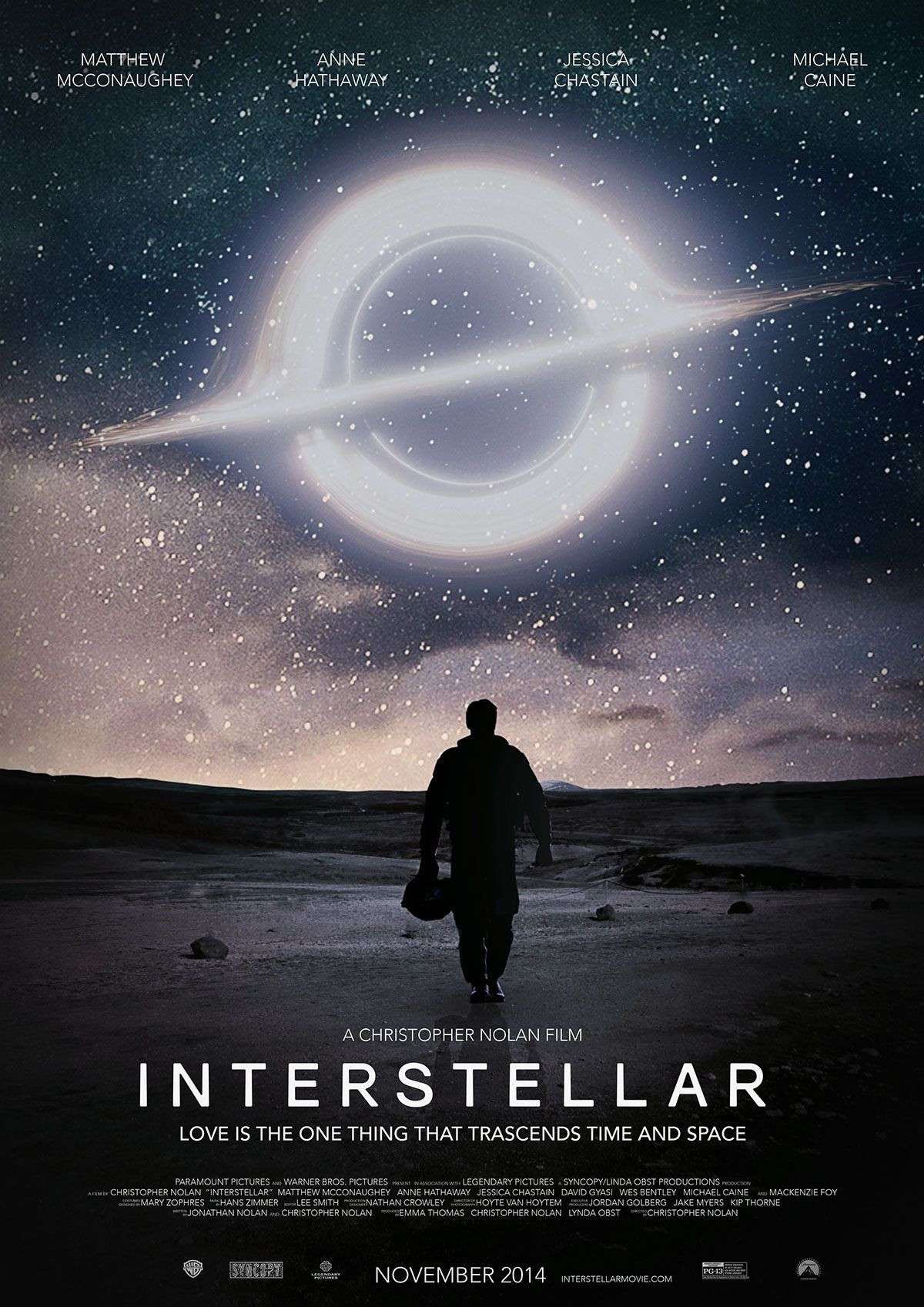
The next one HAS to be INTERSTELLAR of course!

No doubt it is one of the best and scientifically accurate movies and it is everybody's favourite. It has all the elements - it makes you happy, sad, scared and angry, all at the same time. And not to forget that the soundtrack is just out of this world (pun intended).

This also has a novel to explain all the science that happened theoretically. 

No. 3 is GRAVITY

It was a lonely and depressing movie for me but that's exactly how space is if you get stranded. We really should be happy just to be alive and living perfectly well on Earth. That itself is a miracle. Any other scenario and our planet would have ended up like one of its near or far neighbours. After many failed attempts at life in countless other planets, this one just finally managed to get the equations right :D

No. 4...... I think is CONTACT

Let's admit it, we all want to see aliens. At least I do! There's no way we are alone in this huge huugeee universe. Just that I think if we are the higher beings in terms of intelligence and scientific advancement, we need to find life elsewhere. And if the aliens are the higher beings, they probably saw us and don't want to get in contact??? 

#sadlife #alienshateus #waitingforET


Well, the blog is getting long and I think I need to do at least one that is bad too. 

So, let's put No. 5 as GEOSTORM

Oh my god, the movie was a storm. In a really bad way. Normally, I like watching disaster movies (Special mention - Twister! I think that movie cemented my decision of studying science to become a scientist) or the-world-is-going-to-end movies, but definitely not this one. It was just a lot of things that don't make sense.


Other Disclaimer- I have seen many other good (and bad) movies in many different languages but I just don't have the space to write about them. Maybe we need a continuation of this blog? Comment movies you think should have been here!


Shivangi Sharan is a third year PhD student at the Laboratory of Planetology and Geosciences in France. Her research focusses on the study of the magnetic field of planets and to infer their internal structure from it. She is an active member of the IAGA Blog Team and can be contacted via e-mail here.