• Photo by Nicolas J Leclercq on Unsplash
  • Photo by Nicolas Tissot on Unsplash
  • Photo by NASA on Unsplash
  • Photo by USGS on Unsplash

Planetary Magnetic Fields : Gas Giants

Ever wondered how the beautiful auroras we see are formed? You are right, it’s due to the energetic particles carried along with the solar wind from the sun, that enter the magnetic field shield, called the magnetosphere of the planet, interacts there and collects at the poles. Why at the poles? Because that’s how the field lines travel. But it doesn’t just happen on Earth. And it doesn’t just emit visible light spectrum, at least on the outer planets.

Interior models of the giant planets. Image : NASA/Lunar and Planetary Institute

The gas and ice giants of our Solar system - Jupiter, Saturn, Uranus and Neptune - have extremely large magnetic fields and magnetospheres. Their interiors are unlike the interior of the terrestrial planets. They are mostly composed of gases and have a small solid core. Their magnetic fields are similar to that of Earth, i.e, dominantly dipolar, but the magnitudes are much larger than the terrestrial value. 

The interiors of Jupiter and Saturn consist of hydrogen and helium in different forms. Jupiter has the largest magnetic field in the Solar system that is assumed to be generated from the metallic hydrogen in its interior. The magnetosphere is so large that its tail almost reaches Saturn. The metallic hydrogen of Saturn is considered smaller in size comparatively and thus produces a lower magnetic field, but still much larger than Earth’s. The dipole magnetic field axis and the rotation axis almost align.

Magnetic field of the outer planets. Image : Stevenson 2018

The ice giants, Uranus and Neptune, have no metallic hydrogen but have molecular hydrogen and compounds like methane and ammonia in their interior. Uranus has an off-centered field. It rotates on its side due to its large tilt and its magnetic and rotation axes make a 59 degrees angle between them. The magnetic field and magnetosphere of Neptune is similar except that the planet is not as tilted.

Read about the magnetic fields of terrestrial planets here.


Shivangi Sharan is a second year PhD student at the Laboratory of Planetology and Geodynamics in France. Her research focusses on the study of the magnetic field of Mars and to infer its internal structure from it. She is an active member of the IAGA Blog Team and can be contacted via e-mail here.


2021 IAGA-IASPEI Conference

Attend the upcoming conference - http://www.iaga-iaspei-india2021.in/

As anyone working in science knows, conferences are a great way to understand what researchers in your field all over the world are currently working on and an even greater way to meet with them and interact professionally as well as personally.


IAGA holds General Assemblies every two years for scientists to come together and share their work to the community. The reports on IAGA activities are also shared in the meetings in order to take future decisions on the scientific, administrative and financial policies. Previous meetings have been held in different parts of the world like Italy, Canada and South Africa. This year, the meeting was supposed to take place in August in India but due to the pandemic, it will be held completely online. IAGA is conducting a joint assembly with IASPEI, which is the International Association of Seismology and Physics of the Earth’s Interior. 


Don’t miss out on the opportunity to attend and learn about the activities of the Magnetic and Seismic communities and register here!


There would be scientific sessions of the different IAGA Divisions and also joint sessions between them. All topics covered by the researchers working on different themes will be on display through poster and oral presentations. The programme also includes lectures from distinguished scientists in the field. Details for the sessions and lectures can be found in the links below.


Click here to see the scientific program by time and date so that you can choose the ones you are interested in! The business meetings to discuss about the progress and future work of the IAGA Divisions and Commissions can also be found in the link.


All information about the sessions can be found here.


All information about the lectures can be found here.


A Geoscience Information for Teachers (GIFT) Workshop will be conducted on the topic "Understanding the Changing Earth". Click here for the schedule and programme.


The previous meetings and workshops conducted by IAGA can be found here.


IAGA also conducts summer schools before its General Assemblies. Know about them from our previous blog here.


Digitization of Kosmos Missions

Geophysical Center of the Russian Academy of Sciences performed digitization of IZMIRAN catalogues containing historical data of magnetic satellite missions Kosmos49 (1964) and Kosmos321 (1970). 


External view of Kosmos-321 and Kosmos-356 from Krasnoperov et al. 2020.


Totally 17300 measured values are available for Kosmos49 mission, covering homogeneously 75% of the Earth's surface between 49° north and south latitude. About 5000 measured values are available for Kosmos321 mission, covering homogeneously 94% of the Earth's surface between 71° north and south latitude. 

The mission of Kosmos26 and Kosmos49 confirmed the possibility of using Earth’s magnetic field data for determination of spacecraft orientation. The obtained geomagnetic data justified the evidence of propagation of magnetic anomalies, associated with the structure and tectonics of the Earth’s crust, to the heights of low‐ orbiting satellites. 

In 2020, these results were presented to the scientific community in the ESSD data paper “Early Soviet satellite magnetic field measurements in the years 1964 and 1970” by Krasnoperov R., Peregoudov D., Lukianova R., Soloviev A., Dzeboev B. (https://doi.org/10.5194/essd‐12‐555‐2020). The value of the presented data is emphasized by the fact that older and publicly available global satellite data on the Earth's magnetic field in digital form for that period are rare and hard to acquire.


Contributed by the Chair of the Interdivisional Commission on History, Dr. Anatoly Soloviev, from the Geophysical Center, Russian Academy of Sciences, Moscow. The Commission encourages historical geophysical research and preservation of IAGA's history.

IAGA Schools

All about the upcoming IAGA School (Aug 2021) - http://iaga-iaspei-india2021.in/iaga-program.html

IAGA Schools are organised in the week before the IAGA Scientific Assemblies with the aim of providing some basic understanding of a variety of topics covered by IAGA to early career scientists. The sponsored participants include the recipients of the IAGA Young Scientist Awards, and a number of PhDs or Post-Docs who are selected from nominations by the IAGA Divisions and Working Groups. Geographical and gender diversity are additional criteria for the choice of students as well as scientific excellence. Lectures on a broad range of IAGA topics are given by distinguished international experts in the fields, with accompanying practical sessions. 


The schools are a great way for early researchers to socialise and interact with each other and other scientists who are working in the same field. Not to mention, a great opportunity to visit a new country and practically learn about cultural diversity.


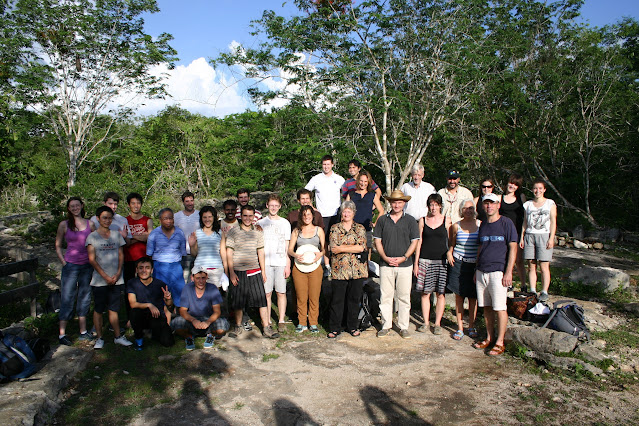
First IAGA School participants and lecturers in Merida, Mexico (2013).


The first IAGA school was held in Merida, Mexico in August 2013 attended by 20 students of 14 nationalities from 11 countries. It covered a wide range of topics like paleomagnetism, electromagnetic induction and data inversions.


The second IAGA school was held in Prague, Czech Republic in June 2015 attended by 22 students of 13 nationalities from 14 countries. It covered almost all topics related to magnetic fields and magnetic field models.


The third IAGA school was held in Hermanus, South Africa in August 2017 hosted by SANSA Space Science and attended by 19 students from 15 countries. The students got hands-on experience handling large data and learning about the atmosphere and space.


The fourth IAGA school was held in Quebec, Canada in August 2019 attended by 20 students from 11 countries. Distinguished scientists shared their knowledge about the physics of planets and its interaction with the sun.


For the first virtual school, this map provides a context about the places where the students and lecturers reside at present. The green rings represent the participating students and the red circles represent the lecturers.

The fifth and upcoming IAGA school was to be held in Hyderabad, India but will now be conducted online from 16th to 20th August 2021. 30 participants from over 10 countries are already interacting with and learning about each other through different online platforms. They will attend lectures and practicals online through virtual rooms on magnetism and aeronomy. 

Though this time the school is online, the organisers are leaving no stones unturned so that the students can interact with and learn about each other as they would face-to-face. Even the lecturers are sparing no effort to make the first virtual school a success. 

And a special message from IAGA to the participants: 

We are looking forward not just to the great scientific exchanges but also to your introductory videos through which all of us can get to know each other in our virtual environment and deepen this when we will finally meet in-person. We hope you extend your network through the school and make new friends! 

And another one from the IAGA President: 

The 5th IAGA School is planned for August 16-20, just before the IAGA-IASPEI Joint Scientific Assembly. The IAGA Summer School Program offers an exciting set of courses with a modern edge in geomagnetism, electromagnetism, paleomagnetism and aeronomy. In these five-day long courses, introductory through advanced level, students will explore specific IAGA topics. 

An international team of professional lecturers will guide you via a journey from the Earth’s core to the magnetosphere. Through lectures and practicals, you will take advantage of the abundant topics our disciplines have to offer. Practical times will help you to develop new skills and refine your understanding of Earth’s magnetism. You will join a vibrant, diverse community of motivated students and distinguished faculty as you satisfy your intellectual curiosity, make new friends from around the world, and explore the many facets of the IAGA. Fill your mind with knowledge and your social networking time with memories. Work hard, play hard and enjoy the balance of achieving your academic goals while enjoying a fun, fulfilling experience with new friends at your side. Today in a virtual world, tomorrow in a face-to-face event, as closeness and face-to-face are two powerful communication and connection tools. 

Your brilliant future is ahead of you!

With my very best wishes,
Mioara MANDEA
IAGA President


Stay tuned for students sharing their experience of the first online IAGA school and know more about the upcoming 2021 IAGA-IASPEI conference in next month’s blog!


Shivangi Sharan is a second year PhD student at the Laboratory of Planetology and Geodynamics in France. Her research focusses on the study of the magnetic field of Mars and to infer its internal structure from it. She is an active member of the IAGA Blog Team and can be contacted via e-mail here.


Planetary Magnetic Fields : Terrestrial Planets

Cutaway views of the interiors of the terrestrial planets reproduced from Solarview. Image : Mulyukova and Bercovici 2021

The four innermost planets of our Solar System - Mercury, Venus, Earth and Mars - are classified as the terrestrial planets due to their similarities in structure. They are composed of metals or rocks and have a solid hard surface.


Starting with our planet Earth, it has the strongest magnetic field among these four. You must have heard that the Earth has a magnet inside it. Well, that’s not entirely right. The convecting motion of metals in the core produces a magnetic field that is similar to the field produced by a bar magnet. To make this dominant dipolar field easier to understand, the field is represented by a magnet inside. But, we also have non-dipolar fields from the core and other sources like the crust and the ionosphere. Equally interesting to study is the change in the magnetic field over time which also tells us that the field changes its polarity. So the compass you are using now will not show the same results to your descendants born after a reversal!

Image : Mouritsen 2015. It shows a representation of the Earth's magnetic field. The geographic and magnetic axes are not aligned but at an angle of about 12 degrees.


The smallest of the planets, Mercury, has a weak core field. The slow rotation of the planet is one of the reasons for its low magnitude. Another is it's not-so-hot core. But the field is still strong enough to have a magnetosphere. More magnetic data from upcoming missions will help to fully understand the planet.

Image : NASA/Johns Hopkins University Applied Physics Laboratory/Carnegie Institution of Washington, from results of the early phases of Messenger satellite. It is a depiction of the magnetosphere of Mercury with distortions of magnetic field (blue) from solar winds. 


Mars has been the hot topic lately. It has also had a bunch of satellites orbiting it and landers on it for some time now. So we can say assertively from those observations that it once had an active core field, i.e., a dynamo. It has remnant crustal fields of magnitudes higher than that observed on Earth that interact with the solar winds and produce mini-magnetospheres. So, surely it had a strong dynamo in the past, sometime near 3.7Ga or maybe 4.1Ga ago?


Images : (Coloured) Brain et al. 2015. The solar wind carries with it particles (yellow and dashed lines) that interact with the Martian crustal magnetic fields (orange). (Black and white) Zhang et al. 2008. Schematic of the induced magnetosphere of Venus.


Lastly, we have Venus. You can feel a little sad for the planet because no one talks much about it when it comes to magnetic fields. That’s because there has been no evidence of any core field there. But don't feel too sad, NASA and ESA have selected a total of three future missions to visit the planet!


Shivangi Sharan is a second year PhD student at the Laboratory of Planetology and Geodynamics in France. Her research focusses on the study of the magnetic field of Mars and to infer its internal structure from it. She is an active member of the IAGA Blog Team and can be contacted via e-mail here.


ICH sessions in IAGA-IASPEI 2021!!

ICH has co‐organized two sessions as part of the upcoming 2021 IAGA‐IASPEI Joint Scientific Assembly : 


“Analogue Data for Future: Preservation and Present‐Day Utilization of Instrumental Historical Data in Geosciences” (together with IASPEI) 

“Remarkable geomagnetic events and indices: Derivation, history, and applications for space weather” (together with Div. IV, V and ICSW)


Do attend the sessions for the submissions from both IASPEI and IAGA communities covering all aspects of historical research in geophysics and involving historical data archives.


Contributed by the Chair of the Interdivisional Commission on History, Dr. Anatoly Soloviev, from the Geophysical Center, Russian Academy of Sciences, Moscow. The Commission encourages historical geophysical research and preservation of IAGA's history.

Unlocking the mysteries of the Earth’s radiation belts

What are the Earth’s radiation belts?

The discovery of the Earth’s radiation belts by Explorer 1 in 1958 was a major milestone in geophysics and astronomy, which marked the birth of magnetospheric physics. The Earth’s radiation belts are two donut-shaped regions encircling the earth, filled with high-energy particles, mostly electrons and ions trapped by Earth’s magnetic field. The inner belt mainly consists of protons, while electrons primarily dominate the outer belt. 


Radiation belts with 2 probe satellites flying through them. Image : NASA

Why do we care about the radiation belts?

These high-energy electrons, also known as “killer electrons”, can cause problems for satellite and astronauts as they have strong radiation. The radiation belts exhibit highly dynamic variations, where multiple physical mechanisms can contribute to alter the topology of the radiation belts and the charged particle fluxes in it. Better understanding of what drives these variations leads to better protection of our satellite and astronauts in space.


How do we study the dynamics of the radiation belts?

Years of efforts have been made in unlocking the mysteries of radiation belts. There are two basic ways to study the dynamics of the radiation belts: observations and simulations. Observations from both satellites in space and ground-based facilities can help us understand the wave activity and charged particle evolution, such as Van Allen Probes, Arase, ground-based magnetometer, etc. Furthermore, the conjunction analysis based on LEO and MEO satellite can link the observed waves with the simultaneously occurring particle precipitations. There are many satellites that help us understand what is going on near Earth, including Cluster, THEMIS, Van Allen Probes, MMS, Arase, etc., which provide a giant database of observation. However, there is a limitation of the observation from satellites as they can only provide limited spatial measurements during each time stamp; this is where simulations come in to help us analyze the physical mechanism that dominantly leads to the observed results. One of the most important advantage of the simulation method is that we can choose to turn on or off a specific factor to see whether this physical process contribute to the simulated results, which can help to interpret the observed variations in the radiation belts. Therefore, we can quantify the role of each mechanism in altering the radiation belt dynamics.


What is the current understanding of the radiation belts?

Owing to continuous accumulations of the high-resolution wave and particle measurements from multiple satellite missions in geospace and the development of the state-of-art modeling during the Van Allen Probe era, significant advances have been made in understanding the dynamic size and structure and their underlying physical mechanisms in the radiation belts. It has been well acknowledged that the size and shape of the radiation belt significantly depend on the solar activity as well as wave-particle interactions in the radiation belts. When the magnetopause is compressed by strong solar wind, the particles can be lost outside the magnetopause, which creates a negative radial gradient in electron phase space density and further leads to outward radial diffusion. Electron flux enhancements can occur by electron injections during substorm or enhanced convection.


Magnetospheric waves. Image : Thorne et al. 2021


There are plenty of plasma waves inside the Earth’s magnetosphere, including those naturally occurring waves: ultra-low-frequency (ULF) waves, plasmaspheric hiss, lightening-generated whistlers (LGW), magnetosonic waves, whistler-mode chorus, electromagnetic ion cyclotron (EMIC) waves, and electrostatic electron cyclotron harmonic (ECH) waves. Besides, the ground-based very-low-frequency (VLF) transmitters radiate emissions, which propagate mostly within the Earth-ionosphere waveguide, penetrate through the imperfectly reflecting ionosphere and leak a portion of their power into the magnetosphere. All these plasma wave modes play an important role in changing the radiation belt dynamics by wave-particle interactions. For example, ULF waves dominantly drive inward radial diffusion, causing energization of particles as they are transported inwards from the source region at high L-shell. Plasmaspheric hiss and EMIC waves can efficiently lead to electron precipitation. Chorus waves provide an efficient mechanism for energy transfer through the wave generation by injected lower-energy electrons and the relativistic electron acceleration by the generated waves. In particular, recent study has proved that VLF transmitter waves can efficiently scatter energetic electrons in the near-Earth space, leading to the bifurcation of the inner energetic electron belts.


Although our understanding of the dynamics of the Earth’s radiation belts has been unprecedently advanced, there are still lots of challenging questions waiting for us to solve. For instance, how to quantify the relative contribution of magnetopause shadowing effects and local wave-particle interactions by EMIC waves to electron dropout? How to incorporate the non-diffusive terms in the current diffusive radiation belt model? When are the nonlinear effects of wave-particle interactions important compared to the quasi-linear results? Does the similar wave-particle interaction also occur on other magnetized planets?


So, let’s get started and prepared to be fascinated by the beauty of the Earth’s radiation belt!


Man Hua is a fifth year PhD student in Wuhan University. She will graduate in June 2021. Her academic interests focus on space physics, mainly about the wave-particle interactions in the Earth's radiation belt. She can be contacted via e-mail here