• Photo by Nicolas J Leclercq on Unsplash
  • Photo by Nicolas Tissot on Unsplash
  • Photo by NASA on Unsplash
  • Photo by USGS on Unsplash

PhD Life Experiences

Hannah Rogers has just submitted her PhD thesis at the University of Edinburgh and is a member of the IAGA Social Media team. Her specialism is in investigating regional magnetic fields of Earth at the surface and the core-mantle boundary using mathematical methodologies. In this blog, she tells us about her experiences during her PhD. You can follow her on Twitter at @Hannah_Rogers94.

I’ve really enjoyed my experience as a PhD student. This has mostly been due to the fabulous community of scientists I have had surrounding me during my research. My supervisors have been great at encouraging me to get involved in opportunities outside my project and I have developed so many skills to take forward in my career. My PhD has provided me with experiences I would not have had otherwise and I loved saying yes to them!

Assisting teaching undergraduate students has been an excellent use of my time. It gave me time away from my computer models and the chance to recap my geophysics knowledge outside of my main discipline. It is extremely satisfying to work with a student and watch the moment they grasp the concept they are struggling with and to know you have helped with their understanding of the world they live in. It’s given me confidence with explaining complex ideas and provided a structure during term time.

A very rainy electrical resistivity profile when teaching undergraduate students geophysical techniques in Shropshire, England.

I undertook two industry placements during my PhD which provided me with the chance to learn new skills like grant writing for ESA industry funding, organising projects and working with different remote sensing data. It was useful to see how academia and industry varied, and have exposure to different sized companies. I developed coding skills in different languages and my understanding of machine learning.

High resolution passive microwave temperature soundings of Typhoon Hagibis from Orbital Micro Systems, 2019.

I really appreciated meeting other graduate students within my department to provide perspective and friendship when times were tough during the PhD, and students from summer schools and other PhD programmes provided a way to broaden my knowledge and discuss ideas. I sat on a committee to run talks and social events for the Earth Science graduate community, which I absolutely loved! It was amazing to meet and work with scientists of all types from across Earth Science and give something back to the community that supported me. 

University of Edinburgh Grad School Event

Finally, working with the IAGA social media group has deepened my understanding of the magnetics community outside of the main field of Earth. I’ve met some really interesting scientists through this and feel like I am contributing to promoting the work of scientists in our field and creating a wider magnetics community.

My main pieces of advice for PhD students is to say yes to opportunities, build friendships with other PhD students (they are the only people who will understand the crazy roller-coaster you are on), and take time to rest in order to work at your best.

Read about her research topic in detail in the next blog. Find an abstract of her PhD topic here.

Ranking sci-fi movies

In today's blog, we plan to do something interesting. Rank space movies based on the science and absurdity they depicted. Science can be fun, so can stupidity. But if too much absurdity is miserably explained by science, it gets a little annoying. 

Disclaimer- This list only has movies that I have seen and remember

So, the first movie that passes all the vibe checks for being a sci-fi is *****drumroll***** THE MARTIAN

I know many of you will hate me for putting it as No. 1 instead of No. 2 but hear me out. It's just that the chances of it happening are much higher than my next choice. Almost all science checks out and it gives us a happy ending! Also, I think I'm partial because I work on Mars. Aannddd... the novel is good too. Give it a go if you have some spare time.


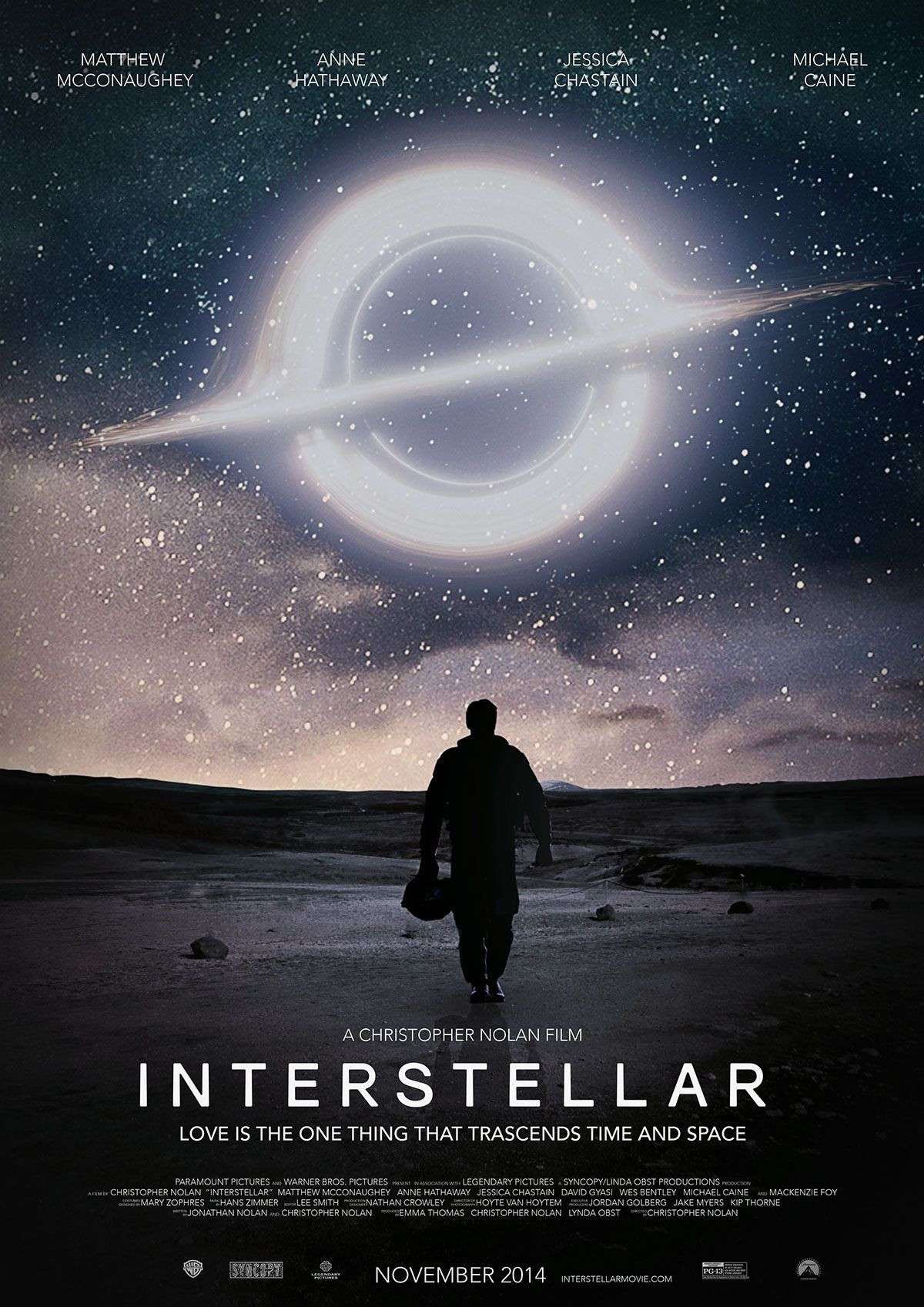
The next one HAS to be INTERSTELLAR of course!

No doubt it is one of the best and scientifically accurate movies and it is everybody's favourite. It has all the elements - it makes you happy, sad, scared and angry, all at the same time. And not to forget that the soundtrack is just out of this world (pun intended).

This also has a novel to explain all the science that happened theoretically. 

No. 3 is GRAVITY

It was a lonely and depressing movie for me but that's exactly how space is if you get stranded. We really should be happy just to be alive and living perfectly well on Earth. That itself is a miracle. Any other scenario and our planet would have ended up like one of its near or far neighbours. After many failed attempts at life in countless other planets, this one just finally managed to get the equations right :D

No. 4...... I think is CONTACT

Let's admit it, we all want to see aliens. At least I do! There's no way we are alone in this huge huugeee universe. Just that I think if we are the higher beings in terms of intelligence and scientific advancement, we need to find life elsewhere. And if the aliens are the higher beings, they probably saw us and don't want to get in contact??? 

#sadlife #alienshateus #waitingforET


Well, the blog is getting long and I think I need to do at least one that is bad too. 

So, let's put No. 5 as GEOSTORM

Oh my god, the movie was a storm. In a really bad way. Normally, I like watching disaster movies (Special mention - Twister! I think that movie cemented my decision of studying science to become a scientist) or the-world-is-going-to-end movies, but definitely not this one. It was just a lot of things that don't make sense.


Other Disclaimer- I have seen many other good (and bad) movies in many different languages but I just don't have the space to write about them. Maybe we need a continuation of this blog? Comment movies you think should have been here!


Shivangi Sharan is a third year PhD student at the Laboratory of Planetology and Geosciences in France. Her research focusses on the study of the magnetic field of planets and to infer their internal structure from it. She is an active member of the IAGA Blog Team and can be contacted via e-mail here.


PhD in IAGA #4

IAGA has a lot of different scientists working on various topics. In this series of blogs, we will introduce some topics that are being worked on by PhD students. Hopefully this will give a better picture of the work being done in the field and encourage more early career researchers.

Hannah Rogers, a PhD candidate at the University of Edinburgh, says:

In my research, I'm interested in separating the Earth's magnetic field into local regions to better comprehend the core-mantle interactions. Most core flow and magnetic field models are described by spherical harmonics. However, they are not suitable for separation into different regions due to leakage. I instead use spherical Slepian functions to spatially and spectrally separate bandlimited potential fields. Long-lived features of the magnetic field have been guessed to be linked to Large Low Velocity Provinces (LLVPs). They are low seismic velocity regions in the lowermost mantle. My aim is to use the Slepian functions to investigate how LLVPs affect core surface flows over time.


The outer core and lower mantle interactions. The arrows represent the magnetic field lines. Credits : Kay Lancaster


Upcoming IAGA events

A lot of science happening... Mark your calendars for what interests you in the upcoming IAGA events! 


SEDI Conference 2022

The 17th Symposium of the Study of the Earth's Deep Interior will be held in Zurich, Switzerland from July 11th to 15th, 2022. SEDI aims for an understanding of the evolution of the Earth's deep interior and the effects it has on the structures and processes observed on the surface. 

The meeting will be hybrid and the programme can be found here.


EM Induction Workshop 2022

The 25th Electromagnetic Indiction Workshop will be held in Γ‡eşme, Turkey from September 11th to 17th, 2022. EMIW research involves the study of all theoretical and practical aspects of the distribution of electrical properties, specifically electrical conductivity, within the interior of planets and their relationship with physical parameters.

The programme for the workshop can be found here.


SEDI Summer School 2022

The 9th edition of the doctoral school in Solid Earth Sciences will be held in Les Houches, France from October 24th to November 4th, 2022. The school trains early career researchers in various aspects of Earth Sciences, like seismology, mineralogy, geophysics, etc.

The program includes lecture series, seminars and a field excursion. Details about the programme can be found here.


IAGA Blogs turns 1!

πŸŽ‰ Happy Birthday to us πŸŽ‰


Thank you for making this initiative work and for spreading word about us!

IAGA Social Media started this adventure hoping to create content and promote our science. We promise to work harder and to reach out to more people!

You are always welcome to send us any suggestions or critics you may have at our emails or social media platforms. 

Keep going on this ride with us where we hope to entertain you with science :D


THANYOU

Life of a Scientist

If you've ever been curious about what people in academics do, here are 5 hints -


1) The first thing they do is complain about the number of emails. Never approach a scientist after they've returned from a vacation.

2) They can give impromptu presentations. They are so used to explaining their results that they don't even need time to prepare most of the time. However, tell them to explain it in short, and they'll be lost.

3) They are always busy. Writing grants. Attending meetings. Teaching. And doing administrative work. Science, you ask? Somewhere in between.

4) Airports are their frenemies. They travel all the time. For conferences, for workshops, for meetings... You name it, they have travelled for it.

5) Most of the times they are working to figure out why something is not working rather than why it is.


However, one important thing to remember while interacting with them is to never insult their topic. They have spent far too long a time studying and working on it. They are naturally very sensitive to it and will defend it with all they have (which basically means they'll eat you alive)!


"Piled Higher and Deeper" by Jorge Cham
www.phdcomics.com


Shivangi Sharan is a third year PhD student at the Laboratory of Planetology and Geosciences in France. Her research focusses on the study of the magnetic field of planets and to infer their internal structure from it. She is an active member of the IAGA Blog Team and can be contacted via e-mail here.


Physics4Peace

The International Association of Physics Students (IAPS) has started a campaign called Physics4Peace. It aims for physicists and students to come together to promote peace and raise awareness about past events where physicists joined hands.

People can anonymously share stories of what they are going through, especially in Ukraine and Russia. IAPS aims to collaborate with their partners for the campaign #physics4peace. Click on the link for more information and to get involved!

IAGA has a collaboration with IAPS and supports its efforts. IAGA also released a statement regarding the ongoing conflict on its website.