• Photo by Nicolas J Leclercq on Unsplash
  • Photo by Nicolas Tissot on Unsplash
  • Photo by NASA on Unsplash
  • Photo by USGS on Unsplash
Showing posts with label phd. Show all posts

STFC Introductory Course

The STFC (Science and Technology Facilities Council) Introductory Course in Solar and Solar-Terrestrial Physics was held at the University of Sheffield, UK from September 2nd to 6th, 2023. This annual course, organised by the UK Solar Physics and MIST (Magnetospheric, Ionospheric, and Solar-Terrestrial) Councils, and approved by the Heads of UK Solar Groups and MIST since 2015, continues to play a crucial role in training early career UK solar system physicists. While most of this year’s participants were from the UK, we were pleased to welcome students from Hungary, Germany, France, India, China, and South Korea, adding a truly international dimension to the event.

This summer school is specifically designed for PhD students who are new to the field, with the aim of helping them upgrade, consolidate, and broaden their knowledge. The program covered a wide range of essential topics in Sun-Earth connections. After each lecture, there was a longer break with coffee and biscuits, providing students an opportunity to engage with the lecturers in a more informal and relaxed environment. Alongside these subject-specific lectures, students also benefited from sessions focusing on career development and public engagement.


A highlight of the course was the careers panel, featuring professionals from diverse backgrounds and at various stages of their careers. The panel included individuals who followed a straight academic path from their Master’s degrees to becoming professors, as well as those who took time away from academia before returning to pursue a PhD and continuing in research. Each panel member shared their unique career journey, offering students different perspectives on navigating both academic and non-academic careers. After sharing their stories, the panel opened the floor for questions, leading to a lively and insightful discussion. Students asked the panelists what they might have done differently, and what advice they would offer to those just starting out. The candid responses provided practical guidance and encouragement, helping students think more clearly about their own career paths and future challenges.

The public engagement talk was equally inspiring, as the speaker shared her extensive experience in conducting outreach activities across the globe. Her insights showed the importance of public engagement and demonstrated how impactful outreach can be for both scientists and the broader community.


- Marianna B. Korsos, Leverhulme Early Career Fellow, University of Sheffield
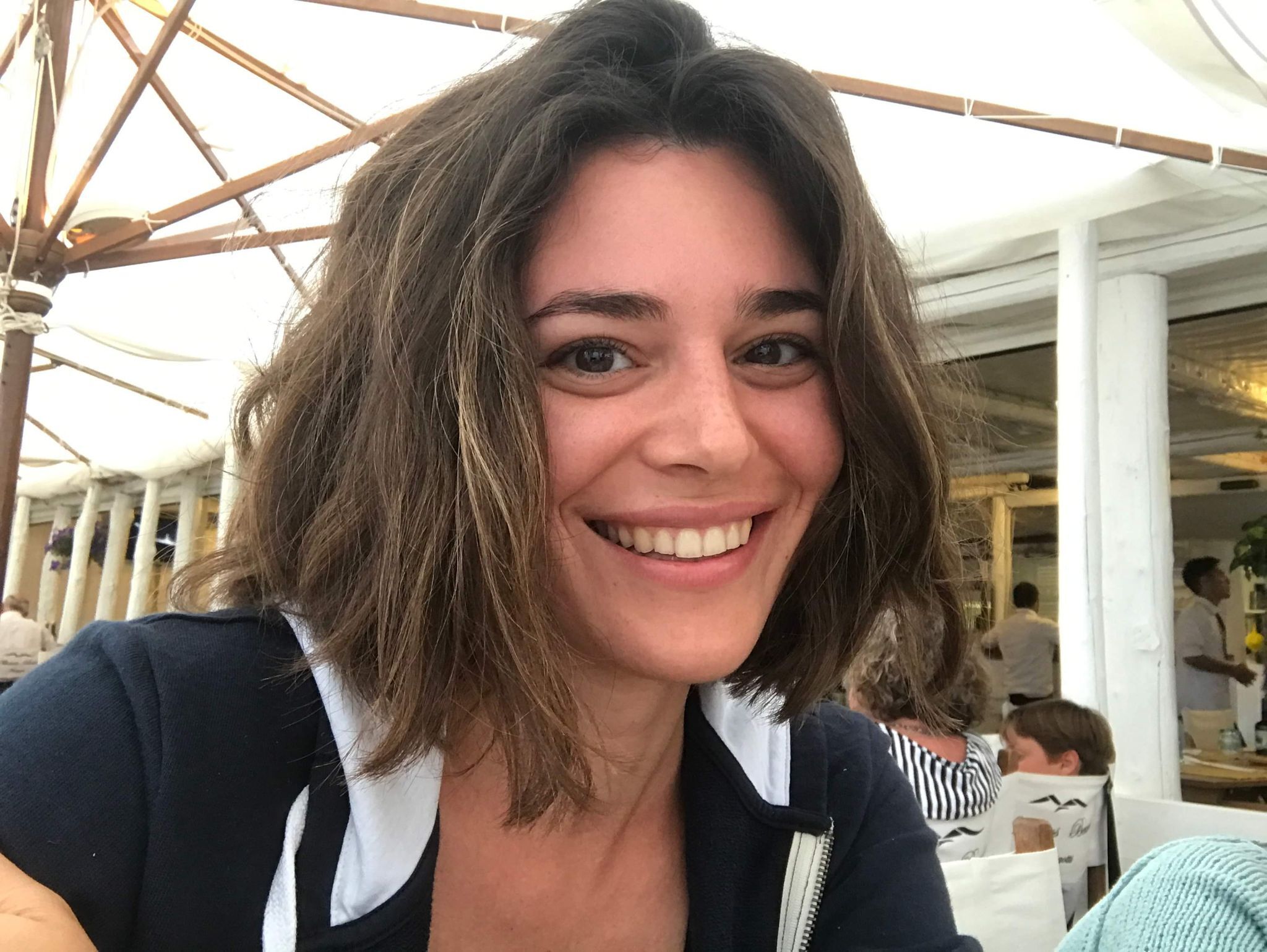
Sara and her science journey

Hi and Happy New Year to all the readers of this wonderful blog. I am Sara Gasparini, PhD student at the University of Bergen in Norway and with great enthusiasm and gratitude I recently became co-chair of the IAGA Education and Outreach committee. I am from the Italian alps, and I attained my Master’s degree in Physics at the Norwegian University of Science and Technology in Trondheim. I wrote my Master’s thesis in Svalbard about the first SuperDARN (Super Dual Auroral Network) radar’s results. Living in Svalbard was a lifetime experience and a great opportunity to improve both my scientific and life skills. I received a Bachelor’s degree from the University of Turin and my thesis showed different approaches for solving the Schrödinger’s equation for molecules far more complex than the hydrogen atom. I am very passionate about life and science and my curiosity has brought me to always learn about different topics. Outreach and education have always been two of my major interests besides science. What I love about outreach is the ability to amaze young minds and people not in the field. It challenges you to think about why we are doing what we do. What motivates our passion and quest for knowledge? What I love about education is that a good mentor and great teachings is all you need to feed your enthusiasm and not let it go to waste. Bright minds are motivated with new challenges and inspiring environments that great mentors know how to provide. And I would love to be that great mentor one day for young students. Passion and charisma is what warms the hearts of us human beings.

This is the SuperDARN radar in Svalbard just before it fell in 2018. This radar is part of a network of more than 30 coherent scatter radars and the radar I used for my Master Thesis to deepen the knowledge on ionospheric electrodynamics. 

My PhD research focuses on the study of the auroral oval, trying to identify the physical processes that give the auroral oval the shape it has. At high latitudes in each hemisphere there is an almost constantly present ring of aurora, known as the auroral oval. The auroral oval is sensitive to conditions in the solar wind—in particular the solar wind’s embedded “interplanetary magnetic field.” Changes in the interplanetary magnetic field have an effect on the rate of magnetic reconnection on the Earth’s dayside and ultimately leads to changes in the auroral oval morphology/topology. Understanding these changes allows for the study of the physical processes and time scales that dictate the shape and dynamics of the large-scale auroral oval. My PhD thesis seeks to understand the mechanisms which are responsible for the growth and contraction of the auroral oval, determining its shape and its changes over time.

My PhD work in the Dynamics of the Asymmetric Geospace group at the University of Bergen currently consists of working with data assimilation. In particular I work with IMAGE (Imager for Magnetopause-to-Aurora Global exploration) satellite images. Satellite images are a good tool to study large scale dynamics of the auroral oval because they continuously show the global response of the ionosphere to particle precipitation, usually the cause of visible aurora and they enable us to follow the shape of the aurora. Precipitating charged particles—protons and electrons with energies varying from approximately 100 eV to 20 keV—travel along the magnetic field lines from the magnetosphere into the upper-atmosphere and their collisions with the ionospheric neutrals cause auroral emissions. This not only creates beautiful patterns in the sky, which have astonished humans since we looked up the skies, but also gives us a tool for keeping track of the precipitating particles and studying their collective behavior in the
ionosphere. Satellite images are also a tool to derive ionospheric conductances which are fundamental when assimilating data using the basic ionospheric physics equations such as the ionospheric Ohm’s law. In my research I combine images from IMAGE with SuperDARN data and ground-based magnetometers data to globally quantify ionospheric convection. Ionospheric convection measurements together with the images allow me to understand the shape and the temporal evolution of the auroral oval. Moreover, they are fundamental quantities to calculate reconnection electric fields. Reconnection electric fields are the key parameters we use to understand the interaction between the Sun and the Earth’s magnetosphere. Hence, my work is devoted to interpreting reconnection electric fields and their associated uncertainties to infer new knowledge.

Here I am preparing the KHO Svalbard auroral cameras to make them ready for the auroral season. In the background is the EISCAT Svalbard incoherent scatter radar.

In my private life I do a lot of meditation. A calm mind is a temple for great ideas. I enjoy discovering new places and being in nature. When I am not hiking or in the middle of outdoor activities, I enjoy swimming at the pool as I generally enjoy water activities very much. I swim in the ocean all year round, even when the fjord temperatures are close to zero in the winter. In general, I like every kind of sport. Skiing is one of my favorite winter sports along with ice climbing, and every week I practice ballet. Determination and perseverance is what I train during my ballet classes. By doing a lot of sports I also strengthen the idea that our mind is our friend if we are healthy and in a healthy environment. As the latins used to say, “Mens sana in corpore sano”. From time to time I like to read about philosophy. Marcus Aurelius is one of my favorite philosophers. I am also passionate about learning new languages and other cultures. As I am a very curious person, I like to try new things, therefore new hobbies are always on the list!

Here I give you a quote from Marcus Aurelius. I like to remind myself of this everyday as we are here to enjoy life and be passionate about what we do. It is also a reminder to practice loving kindness towards ourselves and every being. If you would like to connect and share your experiences feel free to reach out, and if you would like to read one of my outreach articles follow the link below.

“Dwell on the beauty of life. Watch the stars, and see yourself running with them.”


https://www.sciencenorway.no/northern-lights-researchers-zone-sara-gasparini/the-beauty-of-
getting-lost-in-the-loss-cone/2090377

PhD in IAGA #6

IAGA has a lot of different scientists working on various topics. In this series of blogs, we introduce some topics that were or are being worked on by PhD students. Hopefully this will give a better picture of the work being done in the field and encourage more early career researchers.

Dr. Anita Devi completed her postgrad from the Department of Geophysics, Kurukshetra University, India after which she worked for two years as a Geophysicist in TVIPL. She did her Ph.D. from Indian Institute of Technology, Roorkee in 2019. For a brief period of 3 months, she also worked as a Post-Doctoral fellow (SERB-NPDF) at Wadia Institute of Himalayan Geology, India. During her doctoral research, she worked on various electrical and electromagnetic prospecting methods to deciphered resistivity structures. She is currently working as a Scientist at CSIR-NGRI, in magnetotelluric group. 

Her Ph.D. research was focused on 3D (3-Dimensional) individual and joint inversion of magnetotelluric (MT), Radio magnetotelluric and Electrical resistivity tomography (ERT) data. She presented the first 3D resistivity model for Garhwal Himalayan region around Roorkee-Gangotri and Chamoli region. She has worked on all the aspects of Magnetotelluric (acquisition, processing, 3D modelling and inversion). She is interested in delineating the 3D resistivity subsurface structures for exploration and tectonic studies. Her earlier work focuses on the geodynamic studies of Himalayan region. Currently she is working on 3D MT studies of both the Central Indian Tectonic Zone and the Himalaya region. She has published research papers in reputed national and international journals like Journal of Applied Geophysics and Near Surface Geophysics and participated in several International workshops (EMIW, IAGA-IASPEI).

Depth slices of the inverted 3D electrical model of Roorkee-Gangotri profile from Devi et al. 2019 with the letters marking the major resistivity features.


Magnetics Information Consortium (MagIC) Workshop

The Magnetic Information Consortium (MagIC) is a data repository designed to promote information technology infrastructures for the international paleomagnetic, geomagnetic and rock magnetic community. This database is a powerful tool which facilitates magnetic data analysis and sharing. The MagIC Workshop happened from February 28th to March 2nd in La Jolla, CA, and brought together around 60 participants from all over the world to discuss the magnetic field evolution, environmental changes, and paleogeography. The workshop included two days of talks, poster presentations and discussions, and a third day of group working sessions to introduce the uploading and downloading data from the MagIC database and learning how to make contributions from paleomagnetic measurements.

The workshop started with invited speakers who covered a wide range of topics from planetary processes to surface environments, such as the discoveries on the lunar paleomagnetic records, the influence of mantle dynamics on the generation of Earth’s magnetic field, and magnetic records that archive climate and environmental changes. On the second day, there was an introduction on the use of MagIC as a resource for the community, followed by talks focused on paleogeography, in which topics such as constructing Apparent Polar Wonder Paths from Virtual Geographic Poles were presented. The first two days were wrapped up with posters presentations, of which I particularly enjoyed the most. As the workshop was small, it was possible to interact with many different researchers and to gain feedback on my work from renowned people in the field. I was also very impressed on the high-level of the discussions that followed each talk.

The last day of workshop offered a great opportunity to get immersed in the MagIC repository, learn how to upload your own data and how to perform data analysis using PmagGui and PmagPy. Besides all the learning and science exchange, there was a lot of space for networking and interacting with other young and senior scientists during the early-career lunches, coffee break hours and group working sessions. The workshop exceeded my expectations and I’m looking forward to participating on the next edition!


Natália Gauer Pasqualon is a PhD candidate at the University of Hawaiʻi at Mānoa and at Universidade Federal do Rio Grande do Sul, working with many different aspects of hotspot volcanoes. One of her projects involves the acquisition of paleomagnetic data and 40Ar/39Ar ages for Trindade Island, in the South Atlantic Ocean. The findings of her work may contribute to the understanding of the geomagnetic field during the past 3 million years and reveal important aspects of the South Atlantic Magnetic Anomaly.

Pandemic PhD Stories : My french struggle

If you haven't figured it out already from the title, in this blog, I am blaming the pandemic for my lack of french, among many other things. I'll admit it's my brain's fault as well. But lets put more blame on something that can't fight back. Just can kill me or heavily damage my lungs.

Starting with a little background- my name is Shivangi, and I am from India. The first time I ever travelled abroad was for my PhD. So you can imagine my excitement to move to France and finally start my salaried life :D

I took some french classes before arriving in Nantes in November 2019. Half a day here and I realised the left hemisphere of my brain is pretty useless. But also that I needed it to work in order to survive. This meant I had to re-take language classes if I wanted to show off my french back home.

So, I started my lessons again in January and was excelling them. Nice to know my rupees earlier and euros now were not all wasted. But like always, life had other plans (Somehow, they never really match mine). Fast forward two months, and we were in lockdown. I didn't know enough french to get around and didn't have enough knowledge to do my research alone at home. And so my best friends were Netflix and literature review.

The city opened up again and so did my vigour to learn french. I enrolled for the next semester. And, drumroll...... we were back in lockdown! But this one was not that strict and we were still having online classes. But that meant there was always a google translate page open, you know, just in case. I then figured it out- my french classes were triggering the lockdowns. So I gave up.... For the greater good.

Well, it's safe to say that my french sucks. But I get by. Although it does get overwhelming sometimes to constantly hear a language and catch only bits and pieces. The only relief was when I would go to international events but that was like twice in my last year, thanks again to the great pandemic.

Here I was, hoping to meet aliens, but the only foreign bodies I met should be trapped in my mask and thrown away!

But for anyone learning french, don't let it deter you. Like I slandered stressed said, it was the pandemic's fault. As long as you regularly speak it (with and without mistakes), you'll get there. Just keep practicing with a person, and not with a wall like I did.


Image Credits: Pinterest

Comment below your pandemic story!

Do you also have your own Pandemic PhD stories? Tag our social media channels and share your stories or send it to us here and get featured in our next blog! 


Shivangi Sharan is a third year PhD student at the Laboratory of Planetology and Geosciences in France. Her research focusses on the study of the magnetic field of planets and to infer their internal structure from it. She is an active member of the IAGA Blog Team and can be contacted via e-mail here.


PhD in IAGA #5

IAGA has a lot of different scientists working on various topics. In this series of blogs, we will introduce some topics that are being worked on by PhD students. Hopefully this will give a better picture of the work being done in the field and encourage more early career researchers.

Sarasija Sanaka, is a PhD student working at the Institute of Geophysics Polish Academy of Science, Poland. Her supervisor is Dr. hab. Anne Neska. Sarasija says:

My research is about source effects in Magnetotellurics. Source effects are the inappropriate source signals which lead to distortion in the results, which further leads to misinterpretation of the subsurface electrical structure. My task is to identify and understand the origin of such problematic signals. Such signals are dominant in the high to mid-latitude regions. To recognize source effects, we have considered long-term magnetotelluric data, because they reveal temporal changes which cannot be explained by subsurface conductivity changes.

The above figures represent time-dependent transfer functions at 4000s for Grabnik (GRB) and Suwałki (SUV) stations in Poland.


PhD Life Experiences

Hannah Rogers has just submitted her PhD thesis at the University of Edinburgh and is a member of the IAGA Social Media team. Her specialism is in investigating regional magnetic fields of Earth at the surface and the core-mantle boundary using mathematical methodologies. In this blog, she tells us about her experiences during her PhD. You can follow her on Twitter at @Hannah_Rogers94.

I’ve really enjoyed my experience as a PhD student. This has mostly been due to the fabulous community of scientists I have had surrounding me during my research. My supervisors have been great at encouraging me to get involved in opportunities outside my project and I have developed so many skills to take forward in my career. My PhD has provided me with experiences I would not have had otherwise and I loved saying yes to them!

Assisting teaching undergraduate students has been an excellent use of my time. It gave me time away from my computer models and the chance to recap my geophysics knowledge outside of my main discipline. It is extremely satisfying to work with a student and watch the moment they grasp the concept they are struggling with and to know you have helped with their understanding of the world they live in. It’s given me confidence with explaining complex ideas and provided a structure during term time.

A very rainy electrical resistivity profile when teaching undergraduate students geophysical techniques in Shropshire, England.

I undertook two industry placements during my PhD which provided me with the chance to learn new skills like grant writing for ESA industry funding, organising projects and working with different remote sensing data. It was useful to see how academia and industry varied, and have exposure to different sized companies. I developed coding skills in different languages and my understanding of machine learning.

High resolution passive microwave temperature soundings of Typhoon Hagibis from Orbital Micro Systems, 2019.

I really appreciated meeting other graduate students within my department to provide perspective and friendship when times were tough during the PhD, and students from summer schools and other PhD programmes provided a way to broaden my knowledge and discuss ideas. I sat on a committee to run talks and social events for the Earth Science graduate community, which I absolutely loved! It was amazing to meet and work with scientists of all types from across Earth Science and give something back to the community that supported me. 

University of Edinburgh Grad School Event

Finally, working with the IAGA social media group has deepened my understanding of the magnetics community outside of the main field of Earth. I’ve met some really interesting scientists through this and feel like I am contributing to promoting the work of scientists in our field and creating a wider magnetics community.

My main pieces of advice for PhD students is to say yes to opportunities, build friendships with other PhD students (they are the only people who will understand the crazy roller-coaster you are on), and take time to rest in order to work at your best.


Read about her research topic in detail in the next blog. Find an abstract of her PhD topic here.

PhD in IAGA #4

IAGA has a lot of different scientists working on various topics. In this series of blogs, we will introduce some topics that are being worked on by PhD students. Hopefully this will give a better picture of the work being done in the field and encourage more early career researchers.

Hannah Rogers, a PhD candidate at the University of Edinburgh, says:

In my research, I'm interested in separating the Earth's magnetic field into local regions to better comprehend the core-mantle interactions. Most core flow and magnetic field models are described by spherical harmonics. However, they are not suitable for separation into different regions due to leakage. I instead use spherical Slepian functions to spatially and spectrally separate bandlimited potential fields. Long-lived features of the magnetic field have been guessed to be linked to Large Low Velocity Provinces (LLVPs). They are low seismic velocity regions in the lowermost mantle. My aim is to use the Slepian functions to investigate how LLVPs affect core surface flows over time.


The outer core and lower mantle interactions. The arrows represent the magnetic field lines. Credits : Kay Lancaster


PhD in IAGA #3

IAGA has a lot of different scientists working on various topics. In this series of blogs, we will introduce some topics that are being worked on by PhD students. Hopefully this will give a better picture of the work being done in the field and encourage more early career researchers.

Samuel Fielding, a PhD candidate at the University of Edinburgh, says:

My research topic is looking at the current forecasting capabilities within the field of space weather, and trying to improve them and find new avenues of research within the field using machine learning. With the large amounts of data being collected on space weather from the many satellites currently in orbit around the Earth or at the L1 Lagrange point, there is a lot of data to train machine learning algorithms on, and the Earth-Sun system is currently not well modelled by current physical models because of the complexity of interactions within the system. This means that the field is a perfect place to explore machine learning models, and it is a very active field with a lot of research on optimising current prediction models. Can these models be optimised further, and looking forwards, is machine learning the right way for us to predict space weather events?


False-colour image of a solar eclipse from 21 August 2017. Copyright Miroslay Druckmuller. As published in SciTechDaily, 21 June 2021 and Habbal et al. 2021.

PhD in IAGA #2

IAGA has a lot of different scientists working on various topics. In this series of blogs, we will introduce some topics that are being worked on by PhD students. Hopefully this will give a better picture of the work being done in the field and encourage more early career researchers.

Shivangi Sharan is a PhD candidate working in the Laboratory of Planetology and Geosciences at Nantes University, France. She says:

My research entails studying the magnetic field of planets, typically Mars and Jupiter, and deciphering information about its interior structure from them. There are internal and external sources of magnetic fields around a planet which can be modeled using Spherical Harmonics. These models then go on to provide us some details about the static and transient fields as well as about the change in field over time.

Radial component of the internal magnetic fields at the surface of the planets. Credit : From a study report for the Keck Institute for Space Studies (KISS) (https://kiss.caltech.edu/final_reports/Magnetic_final_report.pdf) 


Doctoral and Postdoctoral low benefits of developing countries like Nigeria

In today's blog post, Chukwuma Anoruo, a third year PhD student in the University of Nigeria, talks about the difficulties about research in developing countries. Though there is abundant talent, the lack of opportunities and funding is a major disadvantage that holds back many students that are interested in working in this field.


To begin with, I will first highlight my studentship career in science, early stage, challenges experienced
and how I was able to overcome them through attending virtual international conferences, workshops and communications with senior scientists in Space Science and discussions with my advisors.

My career started with a BS in Physics and MS in Physics of the lower atmosphere, where I majored in aerosols and carbon dioxide measurements and air quality monitoring. The experience was excellent with so much field work exercises, contributing in the group review of the Intercontinental Panel of Climate Change by the APECS, MRI, PAGES-ECN, PYRN and YESS. I was twice lead-chair of the review group and we are currently writing a paper to be published from the review report. Also, we presented the review summary in AGU fall meeting in December 2021, in the session ED43A-05 (hybrid). Also serving as twice Africa regional representative and currently YESS council member gave me room to advance my career and relating with people.

The early stage of my doctoral program was quite funny, with my transition from lower to upper atmosphere study. It was not totally challenging, and all I did was update myself in the field of space weather topic and research. I started reading more manuscripts, textbooks, attending conferences, workshops and engaging in space weather discussion through Twitter and other social media. Most of all, I became a member of Join Study Group (JSG), whose research aim is to improve the understanding of coupled processes in Magnetosphere, Thermosphere and Ionosphere (MTI). The president of the group Associate professor Andrés Calabia Aibar has been of regular help. Also my supervisors have been advising on better pathway, where I join viva and discussions on space weather research trend to keep up-to-date results.

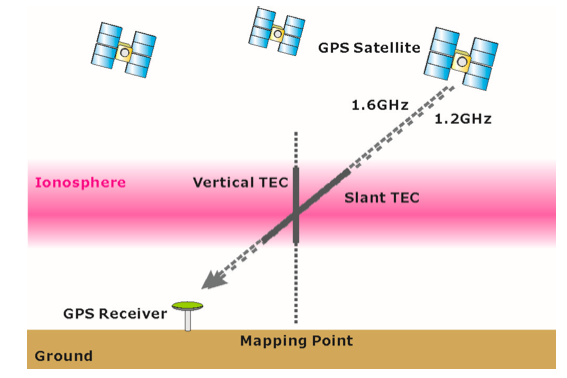
Although after my MS, I got accepted to join a prestigious laboratory in Canada on methane measurements, I was really delayed during the processing of documents and was informed that the position has been given to a Canadian. Then my good friend Kelechi Ndubuisi raised funds for my PhD program. I participated in several space weather discussions, and have helped some MS students to discuss their results. I also interact well with other doctoral students sharing ideas and providing answers to their questions. It is quite unfortunate that doctoral students in developing countries lack adequate funding for research and conference sponsorship. It is difficult getting opportunities to be trained outside our region. The field of upper physics is very interesting, though use of data often becomes a problem, mostly for Africa (Nigeria), where GNSS are quiet scarce.

I started as a PhD student in 2018 at the University of Nigeria, Nsukka. I was received and housed by a friend whom I meet during our BS days. Later, I changed accommodation and the switch became a bit far from the University. It was quiet challenging, mostly due to transportation, where I lack funds to take care of. My research is in total electron content variations during geomagnetic storm. I went on a two months research visit at National Space Research and Development Agency, Abuja. I had the opportunity to concentrate more and work out results in total electron content. I participated in several space physics conferences and one of the conference proceeding will soon appear in International Symposium on Space Science (ISSS) held in Lapan, Indonesia.

GNSS-TEC observations. Credit : http://www.unoosa.org (pdf NICT, Japan)

PhD research where there is no funding really used to be difficult. I know of a friend that quit his PhD when it became obvious that he can no longer get the fund. The government of our country keeps absolute silence over this and to say, PhD students here do not relent in effort. Certainly, I attribute much of my success to hardwork, networking, comments and suggestions from virtual and physical presentations. I see the need to fund PhD students so as to make studentship in Nigeria interesting. I came to know about SCOSTEP program in space research through networking. Although, international laboratory head most times reply that they have limited fund admitting more than 2 students. Such activities should be encouraged also in Nigeria, that will also help get good postdoctoral position and contribute in solving space weather problems. The number of postdocs in Nigeria is low, because most people find it difficult getting an offer. This I should say is lack of training in the field of research. There should be an initiative to support and fund PhD students in Nigeria.

PhD in IAGA #1

IAGA has a lot of different scientists working on various topics. In this series of blogs, we will introduce some topics that are being worked on by PhD students. Hopefully this will give a better picture of the work being done in the field and encourage more early career researchers.

Paweł Jujeczko is a PhD candidate working in the Space Research Centre at the Polish Academy of Sciences. He says:

My research topic concerns the physics of Transient Luminous Events (TLEs). For those not familiar with that abbreviation, TLEs are some various phenomena that occur over very powerful thunderclouds (~10 to 100 km above the ground). In my research I model the behaviour of a TLE called "sprite" with a multi-processor code which works within the kinetic plasma theory. I try to model an instability that is possibly present in a plasma of TLE conditions or in simpler words, I try to tell why sprites look like these on the picture here.

Credit : https://apod.nasa.gov/apod/ap191008.html
 

Code for writing an Academic Article

start writing; 

revision_new = 0;

do

    {  revision_old = revision_new;

        if  ( (mind == full) || (mind == blocked) )    procrastinate ++;

        prepare draft;

        send to co-authors;

        address all comments and revise;

        revision_new = revise; 

    } while  (revision_new < satisfied);

submit paper;


for  (paper = submit; paper <= final; paper ++)

    {  paper submitted in journal;

        editor assigned;


        if  ( paper == rejected ) 

            printf ("\n The paper was rejected. Revise and submit to another journal. \n"); 


        else if  ( paper == passed to reviewers )

            { wait for eternity;

               address reviewer1;

               address reviewer2;

               don't hate reviewers; address reviewer3;

               revise for the billionth time;

               submit paper; 


               if  ( paper == still rejected ) 

                    printf ("\n The paper was rejected. Add more data, revise and submit to another journal. Try not to overthink about your life and curse your luck. \n");


               else if  ( paper == accepted )

                    wait for eternity;

                       pay fees to publish your own work;

                       printf("\n Celebrate. Go back to work on another paper. \n");  }

    } }


Shivangi Sharan is a second year PhD student at the Laboratory of Planetology and Geodynamics in France. Her research focusses on the study of the magnetic field of Mars and to infer its internal structure from it. She is an active member of the IAGA Blog Team and can be contacted via e-mail here.


PhD User Manual


The internet is filled with questions like “What to do a PhD in?”, “Where to do a PhD from?”, “Is it okay to do a PhD in a field different from my background?”, “What to know before starting a PhD? Asking for a friend.” And many more.

Through my personal experiences and observations, here is a list to help answer some of your “What, Where or How” about doing a doctorate.
(Warning: Though this applies to mostly all fields and places, it tends to be biased towards Science Technology Engineering and Mathematics (STEM) fields that are not located in the west part of the Mercator map).

1. TOPIC

Cliché, I know. But the most important thing about doing a PhD is being interested in the topic. Don’t limit yourself to a narrow field but don’t also just look for everything. Try doing an internship or read articles about scientific questions and see if it interests you enough to want to spend years trying to find an answer to them. And don’t be afraid to explore stuff you aren’t very familiar with.

2. SUPERVISORS

Not many people know, but the song “I hate you, I love you… Nobody else above you” by Gnash was written for supervisors (Source: self). Topic and supervisors go hand in hand. You can’t have one without the other. Helpful and motivating supervisors make your PhD journey smoother. Try to know their expertise and work experience from other students and people they have collaborated with. For legal purposes, I would suggest online stalking ONLY.

3. SALARY TAXES FUNDING

Let’s be real – Money is important. PhDs have dual identity. We brag that we “work” till we have to pay. We then immediately shift to being “students” (you know, for the discounts!). So, choosing a place where you can live comfortably is priority. But don’t compromise on the first two points. Also, for some offers, you get a funded position and for others, you need to write a grant. The first option is always easier and fortunately, more available for STEM.

4. PAPERS

Every researcher’s love. This will entirely depend on the lab you are working in. Some require papers before and/or during your course, while others require none. But, in any case, don’t let it bring you down. You have a plan and everything in place, but then, wohooo, no results good enough to publish. And when you do submit, it takes ages to actually get published. Though it’s important, try not to get worked up about it. This is a worry you and your supervisor collectively tackle.

5. LANGUAGE

For you people who are starting their PhDs from a place where you know the language, congratulations, you have successfully skipped this YouTube ad. But if you are starting your PhD in a place where you don’t know the language, it could be a little difficult to adjust initially. Though it will give you an opportunity to learn a new language, but more often than not, it can be annoying. Feel free to curse in your language then.

6. SEGMENTATION FAULT

For all the coders out there, learn to accept messages like “Segmentation fault (core dumped)” as part of coding life. Learn to control the urge to smash the screen when this message appears. Accept it. Embrace it. And then debug the hell out of that missing bracket in the nested loop. It will teach you patience and will make you a better coder. Both plus points for PhD and life!

7. BALANCE

Last but not the least, try to achieve the work-life balance everybody strives for. Singing while driving is not a distraction, it calms you down. Pursue that hobby you always wanted to but didn’t find the time or encouragement to. This is the best time to make mistakes without pondering on anybody’s judgement. You’ll be spending years on a focused topic, try to ease the tension and relax when you want to. You deserve it. You reached here on your own, and you’ll only fly ahead higher.

And, WHAT ABOUT THE FUTURE, you ask?

Well, it is unknown, irrespective of whether you do a PhD or not. You probably heard that academia is hard and competitive. Yes, it is. You continue if you like it and don’t, if you are done. It is okay either ways. The skills you learnt during your PhD will come handy in jobs outside of academia as well. And that hobby you started during your course will most likely be a part of your life inside and outside of your career.

So, don’t worry, apply, and take that PhD offer. You won’t regret it!

Images: (1) Using canva. (2) Facebook Hacker Girl.


Shivangi Sharan is a second year PhD student at the Laboratory of Planetology and Geodynamics in France. Her research focusses on the study of the magnetic field of Mars and to infer its internal structure from it. She is an active member of the IAGA Blog Team and can be contacted via e-mail here.