• Photo by Nicolas J Leclercq on Unsplash
  • Photo by Nicolas Tissot on Unsplash
  • Photo by NASA on Unsplash
  • Photo by USGS on Unsplash

Ease the daunting task of writing

Here are very short and very obvious (but mostly overlooked) steps to write.

If you were looking for your motivation to write, read this blog. If you were unsure about your writing, read this blog. If you were looking for something else, read this blog and comment about it.

1. START

Even if it's one page or one paragraph or one sentence. Start the work. Just write the heading and your name. But start it. 

2. CREATE AN OUTLINE

The next step is to get ready with your idea. It doesn't have to be perfect and it doesn't need to be complete. All you need at this point is to know what you want to write. It could be as simple as "Introduction - Body - Conclusion" or as complex as your work demands. Getting a good outline helps to categorise the work.

3. SET GOALS

Create a deadline for yourself that's not tight. Give ample time to yourself to write. Include the time you'd spend to think of a new idea, procrastinate and revise. That way, if you finish before your set goal, you can either take a break or get a head start for your next goal. Even otherwise, you are still within your deadline.

4. TOOLS - HARDWARE

Use devices that make you want to write. It could be a tablet, an e-ink device, a particular keyboard, your laptop or a desktop. Get whatever eases your writing. You need to be comfortable to be able to write properly.

5. TOOLS - SOFTWARE

Many people prefer to write using LaTex because it is easier to format. Some people prefer Microsoft because their contributors use it. Try not to juggle between different softwares. Focus on one and define your format at the beginning. If its your first time using it, don't get intimidated and ask for help. Nowadays, there are answers to all questions on the internet. 

6. REST AND EAT

Rest whenever you want. Take a break whenever you feel like it. Don't stop your other activities for writing, especially something you like doing. Most of the times, good food makes you feel good about everything. So, eat rest and work. Eat rest and work. Eat rest and work. And repeat.


Image credits: The mighty Internet


Shivangi Sharan is a third year PhD student at the Laboratory of Planetology and Geosciences in France. Her research focusses on the study of the magnetic field of planets and to infer their internal structure from it. She is an active member of the IAGA Blog Team and can be contacted via e-mail here.


On This Day #3

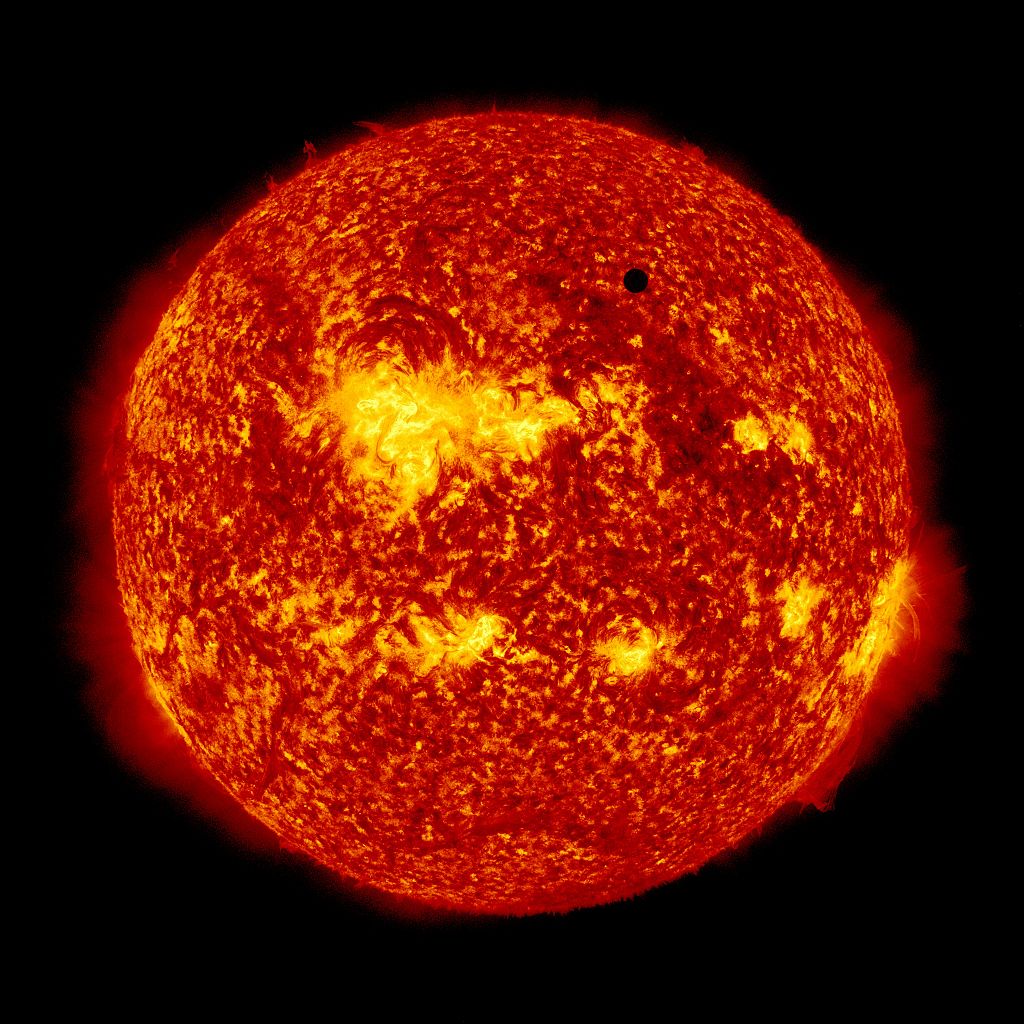
24th November is an important day for the science carried out for Venus. However, it is the Julian calendar date. The Gregorian calendar date is 4th December. In 1639, Jeremiah Horrocks observed the first ever transit of Venus from Earth. A transit is observed when a planetary body passes between the Sun and a planet.

The transit of Venus as observed in 2012 captured by NASA's Solar Dynamics Observatory Spacecraft.

From his calculations in 1631, he had predicted the next transit would take place 8 years later. He had a simple wooden telescope that he used to observe the transit.

He also calculated the solar parallax and concluded that the distance between the Earth and the Sun was more than what was assumed previously.

A painting of Jeremiah Horrocks observing the 1639 transit of Venus by Eyre Crowe in The Founder of English Astronomy, 1891


Space News

The new Artemis 1 launch attempt is in 2 days!

Artemis I is an uncrewed mission that will orbit the moon for 25 days. It is a test mission before NASA sends the Artemis 2 for a crewed flyby around the moon, followed by a landing by Artemis 3.

It would be the first attempt for a lunar landing after the Apollo Missions. The Apollo 11 to 17 missions landed a total of 12 people on the surface. With Artemis 3, scientists including a woman and a person of colour will set foot on the moon for the first time.

The launch for Artemis 1 was originally planned for 29th August. However, it got delayed due to technical reasons. The next attempt was planned for 3rd September which also got postponed due to technical issues. After some weather delays, the new launch window is for 16th November followed by a back-up window on 19th November. We hope this time Artemis flies. Keep your eyes on the sky or on the live updates!

Artemis 1 Map. Credits: NASA


Jovian Magnetic Field

Jupiter generates the largest planetary magnetic field observed in the Solar System. This has been revealed by the various satellites that have visited the planet. However, the latest satellite Juno, brought us one step closer to understanding the field.

Juno was launched by NASA in August 2011 and it reached Jupiter's orbit in July 2016. It has been in a polar orbit around the planet ever since with a period of 53 days. This is the first time that we have measurements covering all the latitudes from low altitudes. This allows us to model the internal magnetic field and the changes in it. At the surface, the field exceeds 1.6 mT, more than 20 times the Earth's field. On Jupiter, we believe that the dynamo, which is the origin of the field, generates in a layer where metallic hydrogen is present. In a new study, we used four years of Juno observations to calculate a global model of the Jovian field. We analysed the energy spectrum of this model and determined that the radius of the dynamo is equal to 0.83 Jovian radii, which is much shallower than in the case of Earth. This radius corresponds to a region where the hydrogen changes phase and becomes metallic, as inferred from new experimental data (Brygoo et al. 2021).

Schematic view of the interior of Jupiter. The grey area depicts the core while the purple area depicts the metallic hydrogen envelop. Our model predicts the upper limit of the dynamo at 0.83 Jovian radii. Credit: Sharan et al. 2022

Thanks to the four years of measurements, it is now also possible to directly observe and quantify the secular (or annual) variation of the dynamo field. The change is about 0.62% in contrast to the change in Earth's field of about 0.35%. The quantity called the secular variation timescales indicate that the processes generating the dynamo are dominantly advective rather than diffusive. Some structures, especially near the equator, suggest zonal movements while other features, especially in the southern hemisphere suggest non-zonal structures. More knowledge about this field can be expected from the extended Juno mission as well as from the upcoming JUICE mission.

The radial field (a) and (b) and the secular variation (c) and (d) at the surface of Jupiter (top) and the dynamo radius (bottom). The surface is assumed to be at 71492 km while the dynamo radius is 0.83 Jovian radii. The black lines in (a) display the orbit configuration of the Juno data used. Credit: Sharan et al. 2022


Reference: S. Sharan, B. Langlais, H. Amit, E. Thébault, M. Pinceloup, and O. Verhoeven, The internal structure and dynamics of Jupiter unveiled by a high-resolution magnetic field and secular variation model, Geophys. Res. Lett., 2022 

On This Day #2

If we look back on this day in history, it marks the birth anniversary of Wilhelm Eduard Weber. He was a German physicist born on 24th October 1804 who together with Carl Friedrich Gauss studied terrestrial magnetism and invented the first electromagnetic telegraph.

A portrait of Wilhelm Eduard Weber. Source: Wikipedia

He developed a number of magnetic maps with his colleagues. Thanks to this, there are now magnetic observatories all over the globe that measure the magnetic field on the surface. These observations are used by scientists to make models of the Earth's magnetic field originating from different sources. They are also important in estimating magnetic indices that provide an indication of the solar disturbances.

The first usage of the letter c was done in Kohlrausch and Weber (1856) to denote a number very close to the speed of light. In his honour, Weber (Wb) is the unit of magnetic flux in the SI units (International System of Units).


IUGG Outreach Project

The International Union of Geodesy and Geophysics (IUGG) has a Grants Program that gives the applicant ample funds to work towards expanding the reach of the association and encourage Early Career Researchers (ECRs). The IUGG comprises of 8 different associations, IAGA being one of them. The applicants submit their application via the Secretary General (SG) of their association.

This year one of the grants has been awarded to IAGA! The proposal was submitted by Katia Pinheiro via our SG Monika Korte. Katia is part of the IAGA social media team and directs videos about researchers. She recently was part of two other outreach projects. She submitted a movie about the geomagnetic field in the UNESCO Earth's Film Festival. Her movie 'Magnetic Mosaic' has been selected as the Top 3 in the category 'Women in Geoscience'. You can know more about it from our previous blog here. The other project is still in progress about short movies for school kids.


The selected IUGG project will include a documentary and short movies connecting a variety of subjects under the 8 associations. The documentary will be about the structure and science of IUGG while the short movies will contain interviews of ECRs. We are still looking for ECRs from the different IUGG associations and would welcome any recommendations or suggestions for the same. The priority will be given to women and researchers from developing countries. 

We hope to reach a wide audience through this initiative. The aim is to spread scientific knowledge to the general public. We hope it would also strengthen the networking between the different IUGG associations, especially for the upcoming researchers. The project would be interdisciplinary since the associations cover a wide range of topics like geosciences, atmospheric and hydrological sciences among many others.

The videos will be broadcasted in the next IUGG General Assembly in Berlin in July 2023 and will be made available on IAGA's social media channels. Don't forget to follow us there!


EMIW 2022

The 25th Electromagnetic Induction Workshop (EMIW) took place in Çeşme, Turkey.

Initially, the “Electromagnetic Induction in the Earth and Planetary Bodies” community was a IAGA working group and part of IAGA Division-I. Some years ago it was upgraded to Division-VI. The most visible outcome of the Division’s activity is closely linked to the International EM Induction Workshops (EMIW). These conferences focus on all theoretical and practical aspects of investigating the spatial distribution of electrical properties within the Earth's and planetary interiors and particularly electrical conductivity, and their relationship with physical parameters considered in seismology, rheology, petrology, hydrology, volcanology, etc.. The techniques used in this domain are applied to investigate geological structures and processes ranging from meter to mantle scale. The workshops focuses also on training Early career researchers (ECRs).

The Division VI chair, Dr. Ute Weckmann, and the Chair of the Local Organising Committee, Dr. Ahmet T. Başokur, inaugurating the EMIW 2022 workshop in Turkey.

The EMIWs are organized once in two years. The history of these workshops reaches back to 1972 when the 1st EMIW took place in Edinburgh, Scotland. Now the 25th EMIW was held on 11-17 September 2022 in Çeşme, Turkey. Çeşme is a town in the west of Izmir on the Aegean Sea. Exceptionally, the last conference was four years ago (Helsingør, Denmark, in 2018). Due to Covid-19, the 25th EMIW had been postponed from 2020 to 2022. Thanks to the Local Organizing Committee (LOC, Chair: Ahmet Başokur) it was a big success. Approximately 150 people from all over the world attended. Besides the traditional invited review talks, ca. 55 oral contributions and 140 posters were presented. After the Covid pandemic, attending the workshop made everyone feel motivated and inspired. Some ECRs for the first time got a chance to interact and discuss with scientists from all over the world.

On 14th September there was an excursion tour. We visited the UNESCO World Heritage Site "The Ancient City of Ephesus", the Archaeological Museum, and the Basilica of Saint John. It was really good to learn about the architecture and lifestyle of the ancient people seen in the carvings and sculptures. The LOC has done a great job organizing such a wonderful workshop.


The participants of the workshop during the excursion to the UNESCO World Heritage Site "The Ancient City of Ephesus".

The EMIW community looks forward to the next workshop in Beppu, Japan, in 2024. The LinkedIn page of Division- VI can be found here.