• Photo by Nicolas J Leclercq on Unsplash
  • Photo by Nicolas Tissot on Unsplash
  • Photo by NASA on Unsplash
  • Photo by USGS on Unsplash

Space News

Let's have a glance at the upcoming Space missions' news!

In 2024, there are some milestones to be achieved for different Space missions. 

Find a sneak peak below.


1) Intuitive Machines 1 - NASA lunar lander launch in mid-February

2) Chang'e 6 - Chinese lunar sample return mission launch in May

3) Bepi Colombo - ESA mission fourth and fifth Mercury flyby on September 5 and December 2

4) Martian Moon eXploration - JAXA Phobos sample return launch in September

5) Europa Clipper - NASA Jupiter orbiter launch in October

6) Hera - ESA asteroids mission launch in October

7) VIPER - NASA lunar lander launch in November


Source: NASA

Image Credit: ESA- D. Ducros 

Sara and her science journey

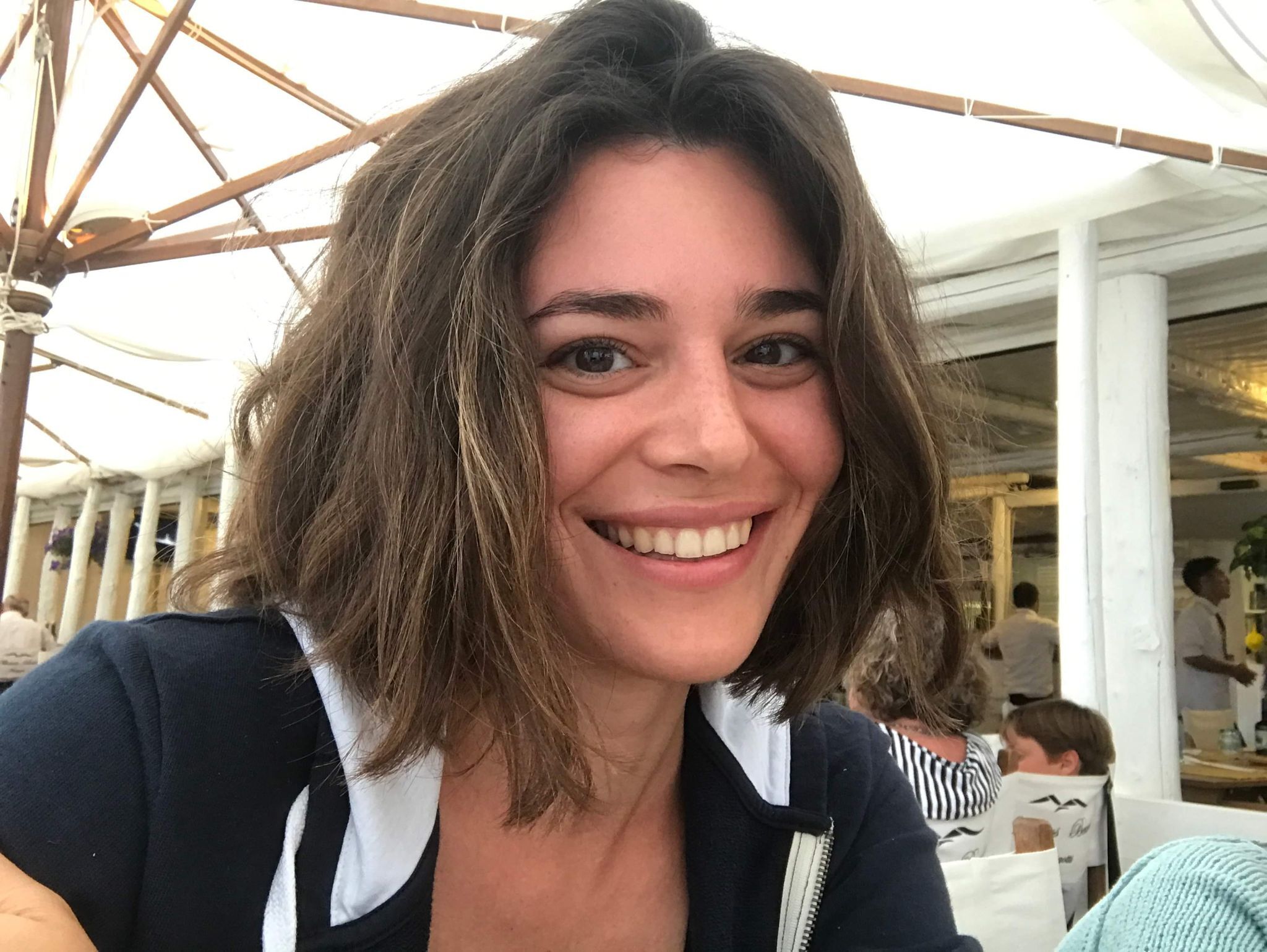
Hi and Happy New Year to all the readers of this wonderful blog. I am Sara Gasparini, PhD student at the University of Bergen in Norway and with great enthusiasm and gratitude I recently became co-chair of the IAGA Education and Outreach committee. I am from the Italian alps, and I attained my Master’s degree in Physics at the Norwegian University of Science and Technology in Trondheim. I wrote my Master’s thesis in Svalbard about the first SuperDARN (Super Dual Auroral Network) radar’s results. Living in Svalbard was a lifetime experience and a great opportunity to improve both my scientific and life skills. I received a Bachelor’s degree from the University of Turin and my thesis showed different approaches for solving the Schrödinger’s equation for molecules far more complex than the hydrogen atom. I am very passionate about life and science and my curiosity has brought me to always learn about different topics. Outreach and education have always been two of my major interests besides science. What I love about outreach is the ability to amaze young minds and people not in the field. It challenges you to think about why we are doing what we do. What motivates our passion and quest for knowledge? What I love about education is that a good mentor and great teachings is all you need to feed your enthusiasm and not let it go to waste. Bright minds are motivated with new challenges and inspiring environments that great mentors know how to provide. And I would love to be that great mentor one day for young students. Passion and charisma is what warms the hearts of us human beings.

This is the SuperDARN radar in Svalbard just before it fell in 2018. This radar is part of a network of more than 30 coherent scatter radars and the radar I used for my Master Thesis to deepen the knowledge on ionospheric electrodynamics. 

My PhD research focuses on the study of the auroral oval, trying to identify the physical processes that give the auroral oval the shape it has. At high latitudes in each hemisphere there is an almost constantly present ring of aurora, known as the auroral oval. The auroral oval is sensitive to conditions in the solar wind—in particular the solar wind’s embedded “interplanetary magnetic field.” Changes in the interplanetary magnetic field have an effect on the rate of magnetic reconnection on the Earth’s dayside and ultimately leads to changes in the auroral oval morphology/topology. Understanding these changes allows for the study of the physical processes and time scales that dictate the shape and dynamics of the large-scale auroral oval. My PhD thesis seeks to understand the mechanisms which are responsible for the growth and contraction of the auroral oval, determining its shape and its changes over time.

My PhD work in the Dynamics of the Asymmetric Geospace group at the University of Bergen currently consists of working with data assimilation. In particular I work with IMAGE (Imager for Magnetopause-to-Aurora Global exploration) satellite images. Satellite images are a good tool to study large scale dynamics of the auroral oval because they continuously show the global response of the ionosphere to particle precipitation, usually the cause of visible aurora and they enable us to follow the shape of the aurora. Precipitating charged particles—protons and electrons with energies varying from approximately 100 eV to 20 keV—travel along the magnetic field lines from the magnetosphere into the upper-atmosphere and their collisions with the ionospheric neutrals cause auroral emissions. This not only creates beautiful patterns in the sky, which have astonished humans since we looked up the skies, but also gives us a tool for keeping track of the precipitating particles and studying their collective behavior in the
ionosphere. Satellite images are also a tool to derive ionospheric conductances which are fundamental when assimilating data using the basic ionospheric physics equations such as the ionospheric Ohm’s law. In my research I combine images from IMAGE with SuperDARN data and ground-based magnetometers data to globally quantify ionospheric convection. Ionospheric convection measurements together with the images allow me to understand the shape and the temporal evolution of the auroral oval. Moreover, they are fundamental quantities to calculate reconnection electric fields. Reconnection electric fields are the key parameters we use to understand the interaction between the Sun and the Earth’s magnetosphere. Hence, my work is devoted to interpreting reconnection electric fields and their associated uncertainties to infer new knowledge.

Here I am preparing the KHO Svalbard auroral cameras to make them ready for the auroral season. In the background is the EISCAT Svalbard incoherent scatter radar.

In my private life I do a lot of meditation. A calm mind is a temple for great ideas. I enjoy discovering new places and being in nature. When I am not hiking or in the middle of outdoor activities, I enjoy swimming at the pool as I generally enjoy water activities very much. I swim in the ocean all year round, even when the fjord temperatures are close to zero in the winter. In general, I like every kind of sport. Skiing is one of my favorite winter sports along with ice climbing, and every week I practice ballet. Determination and perseverance is what I train during my ballet classes. By doing a lot of sports I also strengthen the idea that our mind is our friend if we are healthy and in a healthy environment. As the latins used to say, “Mens sana in corpore sano”. From time to time I like to read about philosophy. Marcus Aurelius is one of my favorite philosophers. I am also passionate about learning new languages and other cultures. As I am a very curious person, I like to try new things, therefore new hobbies are always on the list!

Here I give you a quote from Marcus Aurelius. I like to remind myself of this everyday as we are here to enjoy life and be passionate about what we do. It is also a reminder to practice loving kindness towards ourselves and every being. If you would like to connect and share your experiences feel free to reach out, and if you would like to read one of my outreach articles follow the link below.

“Dwell on the beauty of life. Watch the stars, and see yourself running with them.”


https://www.sciencenorway.no/northern-lights-researchers-zone-sara-gasparini/the-beauty-of-
getting-lost-in-the-loss-cone/2090377

2024 IAGA Events

With our wishes for the new year, here are the IAGA events that will take place in 2024-


    May 6-10 : 12th International Workshop on Long-Term Changes and Trends in the Atmosphere (TRENDS 2024) : Joint IAGA and IAMAS in Ourense, Galicia, Spain.

    May 13-17 : Course on Operational Space Weather Fundamentals : L’Aquila, Italy.

    June 2-7 : The Combined ANGWIN/VCAIS Meeting : Fredericton, New Brunswick, Canada.

    June 23-2818th Symposium of SEDI : Great Barrington, MA, USA.

    June 30- July 518th Castle Meeting - New trends on Paleo-, Rock- and Environmental Magnetism : Utrecht, Netherlands.

    September 7-1326th Electromagnetic Induction WorkshopBeppu, Japan.

    September 30- October 411th VLF and ELF Remote Sensing of the Ionosphere and Magnetosphere (VERSIM) Meeting : Breckenridge CO, USA.

    October 6-9Electromagnetic Studies of Earthquakes and Volcanoes (EMSEV 2024) : Joint IAGA, IASPEI, IAVCEI in Chania, Greece.

    October 31- November 6XXth IAGA Workshop on Geomagnetic Observatory Instruments, Data Acquisition and ProcessingVassouras, RJ, Brazil.


Other than these events, IAGA science will have sessions in other conferences like EGU, COSPAR and AGU. Keep a look out at our Twitter channel for more info and let us know if we missed any event in the comments.

🎉 Have a happy and exciting new year! ðŸŽ‰


'Geoscience Connections' Documentary

While we already informed you about the 'Geoscience Connections' project where short introduction and science videos of Early Career Researchers are showcased every week on YouTube in our older blog, we have more news! The project awarded by IUGG (International Union of Geodesy and Geophysics) to the joint IAGA-IASPEI proposal consists of a documentary and short videos showcasing the work done by the community of scientists that fall under the 8 associations of IUGG. And.... the documentary is out now on IAGA and IUGG Youtube channels!

Under the project, two videos are available- 'Earth Human Connections' and 'Geoscience Connections'.

'Earth Human Connections' is a short animated movie that shows the evolution of Earth through an analogy between humans and Earth. The timeline starts from the formation of our planet and across billions of years when humans became Earth’s inhabitants. On the one hand, the intelligent human brain allowed for the development of various brilliant technologies and a complex society. On the other hand, humans have participated in the uncontrolled exploitation of natural resources, and are thought to have caused many problems to other living beings on our planet. This movie also won the 'Audience Award' at the Braga Science Film Festival.

'Geoscience Connections' is a documentary that leads you through a fascinating journey through the Earth’s history, explained by eight early-career researchers who represent each international association of IUGG. The geoscientists help us to better understand Earth processes, bring us hope for the problems humanity faces and solutions towards a more sustainable Earth. The early career scientists that were involved in the documentary include- 

International Association of Geodesy (IAG) - Hugo Lecomte 
International Association of Geomagnetism and Aeronomy (IAGA) - Hannah Rogers 
International Association of Seismology and Physics of the Earth's Interior (IASPEI) - María Isaba 
International Association of Volcanology and Chemistry of the Earth's Interior (IAVCEI) - Kyriaki Drymoni 
International Association for the Physical Sciences of the Oceans (IAPSO) - Malin Ödalen 
International Association of Hydrological Sciences (IAHS) - Bertil Nlend 
International Association of Meteorology and Atmospheric Sciences (IAMAS) - Jing Li 
International Association of Cryospheric Sciences (IACS) - Erik Loebel 

Narrator - Elodie Kendall

We hope to reach a wide audience through this initiative and spread scientific knowledge to the general public. We also hope it would strengthen the networking between the different IUGG associations, especially for upcoming and early career researchers. 

Please have a look and share if you learnt something new! Head over to our YouTube channel for more content for kids, public and researchers.


Unraveling Earth's Ancient Geography: Advancements in Paleomagnetic Analysis and Plate Reconstructions

Plate tectonics plays a crucial role in shaping Earth's geography, impacting the evolution of life and climate. To really understand the long-term evolution of Earth’s systems, we need to quantify the past motions of the tectonic plates. Plate reconstructions have been crucial in figuring out an enormous array of Earth processes.

Conventionally, past plate motions are inferred from physical characteristics of the sea floor, specifically its magnetic anomalies and fracture zones. Together, those features have allowed the construction of global plate reconstructions back to the Cretaceous (~130 Ma). But the inherent nature of plate tectonics masks its own origin story: oceanic lithosphere records are progressively destroyed by subduction, so they cannot be used in deeper time. Before 130 Ma, plate motions can only be quantified through the study of paleomagnetism.

Over long time scales (~105-106 years), the geomagnetic field can be approximated by a geocentric axial dipole (GAD), where the vertical field component is specifically linked to latitude and the horizontal component consistently points north. This means that if a rock can record the direction of the paleomagnetic field during its formation and the GAD hypothesis remains valid (at least back to ~540 Ma), we can establish its original paleolatitude and azimuthal orientation! However, analytical limitations have so-far prevented us from using this tool to its full potential. For example, owing to the axial symmetry of the Earth’s magnetic field, the determination of paleolongitude from paleomagnetic data –although theoretically possible– cannot be constrained. Paleolongitude has thus remained the greatest uncertainty in pre-Cretaceous plate reconstructions (top panel figure).

Paleomagnetic records are collected from individual rock samples and subsequently grouped to develop global-scale paths called apparent polar wander (APW) paths. These APWPs represent the time-dependent position of Earth's spin axis relative to a given block of lithosphere or continent.

Hypothetical APWP track (filled dots).
Top panel: Conventional paleomagnetic reconstruction where paleolongitude remains unconstrained.
Bottom Panel: the APWP segment traces a small circle, the centre of which represents the Euler vector. Rotations about Euler poles can completely define plate motion so PEP analysis yields east-west motion.


Euler’s theorem states that any displacement across the surface of a sphere can be represented by a rotation about an axis (i.e. Euler vector). Consequently, if a continent rotates about a fixed axis, the corresponding paleomagnetic poles (i.e. APWP segment) will trace an arc which can be defined by a small circle, the centre of which represents the Euler vector. The inversion of paleomagnetic data to retrieve Euler vectors – or paleomagnetic Euler pole (PEP) analysis – is of particular interest because it offers the possibility to recover full kinematic descriptions of past plate motion. Because an Euler vector can fully express the kinematics of a continent, if paleomagnetic data can be used to compute Euler vectors describing a given plate’s history of motion, its paleolongitude is determinable!

This exciting method could overcome the paleolongitudinal indetermination of paleomagnetism, but despite being first conceptually introduced more than half a century ago has seen limited application. This appears to be due, at least in part, to the fact that paleomagnetic data is inherently noisy, with noise coming from both intrinsic (geomagnetic secular variation) and extrinsic (e.g. measurement errors, erroneous age assignments in rocks, inclination shallowing, etc.) uncertainties. For instance, current APWPs describe plate motion in 10 Ma steps, yielding a crude description of plate latitudinal and azimuthal motion.

Recent advances in APWPs construction methods have demonstrated that through new methodologies and computational methods, it is possible to generate APW paths with unprecedented spatial and temporal resolution (~1Ma). These new methods may offer new insights into Earth's deep time evolution. Great things are on the horizon!


Leandro Gallo is a Maria SkÅ‚odowska-Curie postdoctoral fellow at the Center for Planetary Habitability (PHAB), a Center of Excellence funded by the Norwegian Research Council and hosted at the University of Oslo (UiO), Norway. His research focus is reconstructing the long-term changes in the ancient spatial configuration of continents (paleogeography). A major focus of this research is on paleomagnetic data synthesis tools, combining data-analysis, data-science and statistics to constrain polar wander through deep time.

A paleomagnetist on board the JOIDES Resolution ocean drilling vessel

I was having a shower at the beginning of our last day on the ship- warm and comfort shower- and suddenly I smell something different, something like mold. I come out to the deck to realise that we have docked in Reykjavik, that it was the smell of land, the smell of the end of our two months expedition spent in the middle of the North Atlantic Ocean. A turmoil of feelings where silence would prevail. The entire scientist staff, the technical staff, some of the crew, the Capitan, we were all standing still, under a Nordic cold sun, watching the docking operations. The ever-changing colour of the Ocean turned to dark green port-like waters, full of birds, docks and ducks, land all around! It has been two months without seeing (and smelling) land.

We were coming back from our two months sailing in the legendary ship, the JOIDES Resolution (JR), for the International Ocean Discovery Program (IODP), Expedition 395 “Reykjanes Mantle Convection and Climate: Mantle Dynamics, Paleoceanography and Climate Evolution in the North Atlantic Ocean” with Ross Parnell-Turner from Scripps, California, Anne Briais from Toulouse in France as Chiefs, and Leah LeVay from IODP Texas A&M University as Project Manager/ Staff Scientists. We should have sailed in 2020 but because of the global Covid-19 pandemic, the JR Expedition sailed with only a few technical staff and became Expedition 384; one year later the expedition was postponed, becoming Expedition 395C, with only Leah as a Science Staff. Finally, this year, the entire Science Staff could sail. After a good amount of last-minute shopping, including chocolate, tea, biscuits and a hard disk, we set sail from the Ponta Delgata port in Sao Miguel (Azores, Portugal) on the 12th of June to drill a transect of 4 out of the 6 sites originally planned (2 were completed during Expedition 395C) from the East to West in the North Atlantic Ocean, south of Iceland. 

My job as a shipboard paleomagnetist was to measure all the sediment and hard rock cores in the Superconducting Rock Magnetometer to reconstruct the Earth's magnetic field changes in polarity to provide an age of the sediments. We compare these polarity changes recorded in the oceanic sediments (normal polarity is like the present day setting while the reverse polarity is when the North pole flips to the South Pole) with a global reference scale (called Geomagnetic Polarity Time Scale; Ogg 2020) to estimate the age of the sediments, and then we combine the paleomagnetic observations with the encounters of microfossils which also provide an independent age. We had 12 hours shifts and at the end of each shift (at noon and at midnight), we had a crossover meeting with all the other groups of scientists- the sedimentologists, the physical properties scientists, the geochemists, the stratigraphic correlators, the palaeontologists, us the paleomagnetists, the outreach officer, the staff scientists and the two chiefs. 

My typical day started with a one hour gym session in the morning, breakfast/lunch (which was always delicious), crossover meeting with my counterpart in the same role, Sarah, and then here we go, measuring all day meters and meters of ‘boring’ muds. I say ‘boring’ as their properties, colour, granulometry did not change much, but what I really mean was ‘amazing’ and ‘ideal’ for paleomagnetic studies as they require homogenous lithology and continuous sedimentation to capture with a clean signal all the polarity changes! Do not think that Sarah and I did all by ourselves... An amazing team of technicians was always there, ready to help answer questions and fix some mistakes (yes, we make mistakes and it’s ok). For every week there was a weekly report, for every completed site there was a site report and site summary and a meeting with everyone else to share the fresh off the measurements and interpretation results. Yes, hard work! In a hectic around the clock pace of laboratory work, data interpretation and report-writing, science was unveiling under our amazed eyes. Fuelled by coffee, music and peer comfort with frequent and short breaks (and a longer one for lunch/dinner), we made it! We drilled all the sites, exceeding the expectations, drilling more than 4 km of sediment cores, and 120m of basalts, nearly breaking the record of the deepest site ever drilled in one expedition. The Ocean was clement, calm for most of the time, blue, grey, silver, black, flock of birds were around us and some cetaceous visited us. It was simply an amazing experience, for the amazing group of scientists bringing their different expertise to the table, to achieve the expedition's goals and advance science…but I am sad that this program will end in just nine months.

That’s it. The JR needed repairs, but the main funding body cut the expenses out and none of the other international contributors stepped up to challenge. Nobody else will be able to sail on the legendary JR, breaking the boundaries of science by deep ocean drilling. We take comfort that the legacy remains for future scientists, of many kilometers of rock in the Core repositories of College Station in Texas and in Bremen but the specialised expertise to conduct a state of art floating laboratory are sadly lost, forever.


by Dr. Anita Di Chiara (she/her)

Researcher

INGV - Rome

One of the crew on the JR Expedition 395


Photo Credits-
 
1 and 2: Jen Field, Outreach Officer
3: Dr. Sevi Modestou, shipboard sedimentologist